
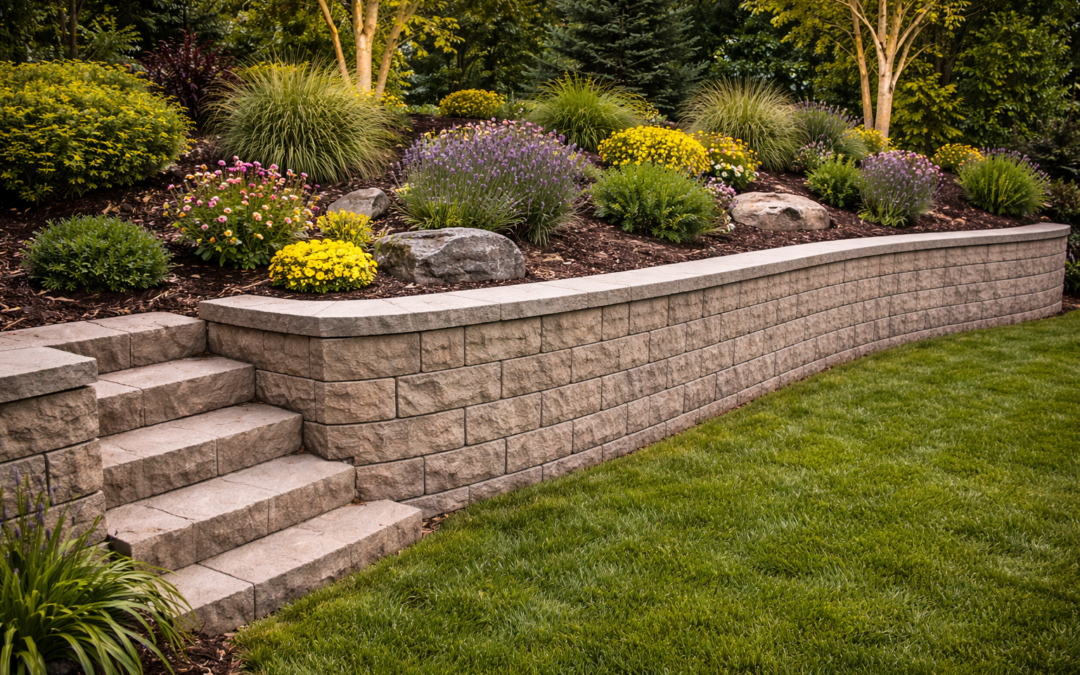
Retaining walls are a convenient and attractive means of controlling soil, avoiding soil erosion, and establishing a level area in your yard. They may, however, just like any type of structure, have problems with passing time. Knowledge of these universal problems and their prevention will make you have a long-term and beautiful wall.
Soil Erosion Behind the Wall
Soil erosion is one of the most common problems. When a retaining wall collects water behind it, it may weaken the soil, resulting in a pressure that may push the wall forward.
Prevention: Proper drainage should be done by placing gravel backfill, gravel perforated pipes, or weep holes. These assist the water to escape, decreasing pressure against the wall.
Wall Leaning or Bowing
Structural stress is indicated by a leaning or bowing outwards wall. This can frequently occur because the wall is too high with respect to its thickness or is not well supported.
Prevention: Taller walls require reinforcement such as geogrid or tie-backs. Besides, ensure that the foundation is substantial and strong enough to support the weight of the soil.
Cracks and Surface Damage
Settling soil, change in temperature, or improper construction can cause cracks in concrete, stone or brick walls. Small cracks may be cosmetic, whereas bigger cracks may point towards significant structural issues.
Prevention: Work with good-quality materials and give concrete time to cure. With stone or brick walls, make sure that the mortar is properly applied, and support the wall by inspecting it regularly.
Water Pooling at the Base
A retaining wall may cause the soil to saturate and the wall to collapse because of the ponding of water at the base of the wall. This is usually caused by poor drainage or grading.
Prevention: Slope the ground in a direction opposite to the wall. Look at French drains or surface drains as an option to handle heavy rainfall.
Plant Roots Causing Damage
Plants that are too close to a retaining wall, such as trees or large shrubs, can influence the stability of the wall. The roots move and expand, creating pressure against the wall or pulling moisture from the soil, which can result in settling or cracking.
Prevention: Have small shrubs or groundcover planted near the wall rather than large trees. Keep a distance between the structure and roots to avoid root interference.
Frost Heave in Cold Climates
When the temperatures drop to freezing, water in the soil will freeze and expand, pushing the wall a little, resulting in misalignment or cracks.
Prevention: Construct walls that have an appropriate drainage system and those that are frost-resistant. This risk can also be minimized by using deep footings below the frost line.
Weak Construction Practices.
In other cases, the issue is merely the way in which the wall was constructed. Lumpy stones, insufficient foundations, or insufficient backfill will all reduce the life of a wall.
Prevention: It is always best to employ skilled workers or use building regulations. Quality craftsmanship and detailing can help a lot.
Retaining walls have the power to change your garden; however, knowing these issues and prevention will make sure that the investment you have made continues to pay off over the years. Thoughtfully plan, construct, and maintain to have a stable and good-looking wall.
Make your yard attractive today with a strong retaining wall that will survive the test of time!