
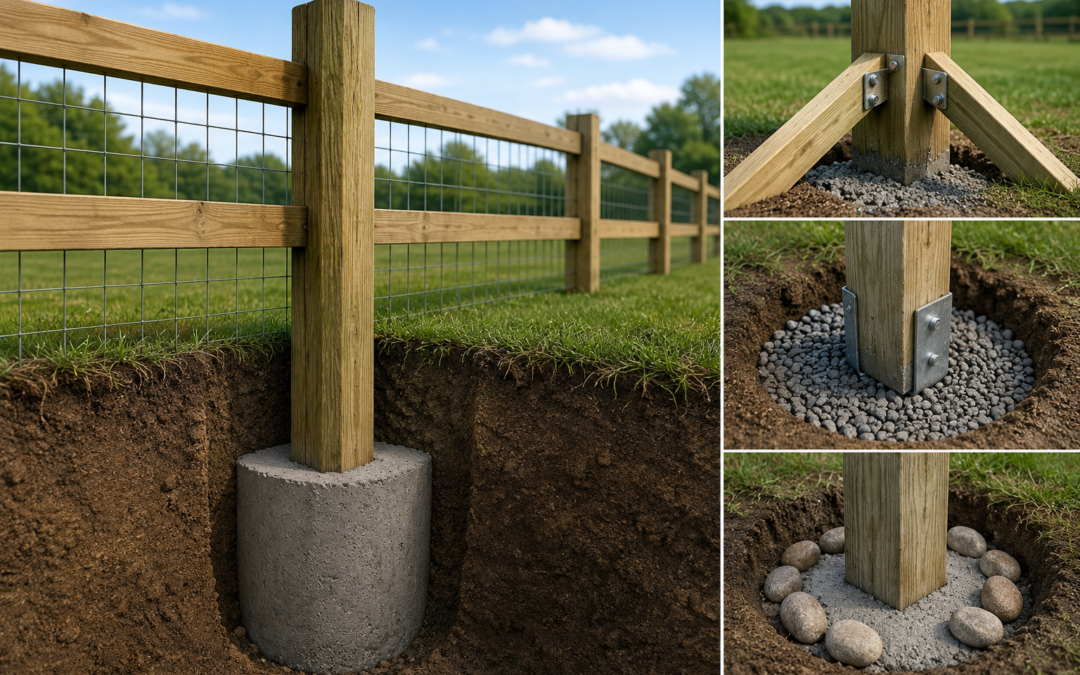
The posts keep a fence as strong as they are. Regardless of the quality of the panels or rails, posts that are weak or unstable may cause leaning areas, sagging gates and costly repairs. The proper installation of fence posts at the onset will make your fence strong over the years regardless of weather, water and soil erosion.
Whenever putting up your new fence or reinforcing an old fence, the correct reinforcement will make the difference between a stable fence and one that does not last long.
Begin with Right Post Material
The quality of your fence begins with the selection of the quality of post material. The choices are typically treated wood, steel, metal covered with vinyl and composite posts.
Residential fences are made with pressure-treated wood, which is cheap and appealing. Nevertheless, it has to be ground-rated to prevent rot and insect damage. The steel posts are very strong and can be used in windy areas or with heavy fence panels.
Strong materials are selected to ensure that the chance of premature failure is minimal and to provide the fence with a firmer base.
Dig Posts Deep Enough
Shallow installation is one of the largest causes of fence posts leaning. The posts should be deep-rooted to avoid movement and pressure with time.
One of these rules is to leave a third of the total length of the post below the ground. Suppose a 6-foot fence normally requires an 8-foot post, of which approximately 2 feet is to be buried. In lower temperatures, the posts need to be below the frost line as well to prevent heaving after freeze-thaw cycles. Further installation will form a stronger anchoring and improved balance.
Use Concrete Footings Properly
Fence posts can be reinforced with concrete one of the best ways. It secures the post in place and provides weight on the bottom to stabilize.
When pouring concrete:
* Enlarge the hole three times the post.
* Add gravel on the bottom to drain.
* Fill the post with concrete.
* Slope the top of the concrete off the post to shed water.
This keeps standing moisture off wood posts and minimizes rotting.
Insert Drainage Gravel
One of the largest enemies of fence posts is water. Wet soil may lead to decaying of wood, rust and movement with time. Prior to the post, put down a few inches of compacted gravel at the base of the hole. Gravel enhances water drainage and prevents stagnation of water at the bottom. It also assists in stabilizing the bottom of the post at the time of installation. This little step can greatly increase post-lifespan.
Install Metal Post Brackets or Post Anchors.
Fence posts can be equipped with metal anchors and brackets to provide additional support. They are particularly effective when used in gates, corner posts and in places that are prone to strong winds.
Anchors assist in the distribution of weight in a more balanced manner and minimize motion during stress. Others also raise the wood posts a little higher than the ground, so that they are not moistened directly. They serve as a great long-term form of reinforcement.
Weaker or Leaning Existing Posts.
When the sections of an older fence lean, then complete replacement may not be required, always. The support braces are able to get the strength back in a short time.
Solutions include:
* Spikes of steel to be pushed at the side of the post.
* Fixed spur posts to broken wood posts.
* Adjustable metal braces
Repack soil and gravel around small movements.
Such techniques assist in fixing the fences, which are already old, but do not involve rebuilding the whole structure.
Shield against Wind Pressure.
Privacy fences are tall enough to be blown away by the wind. With time, posts may be pushed or tilted by the pressure of the wind.
To reduce wind stress:
* Space posts correctly
* Have heavier corner and gate posts.
* Attach horizontal rails.
* Think of shadowbox or semi-privacy designs that are air-conditioned.
Less wind resistance increases the life of the posts by many years.
Perform Routine Maintenance
Even reinforced fence posts require some attention. Test your fence once a year on whether it is moving, has cracks, rust or soil erosion at the bottom of the fence.
Repaint sealant on wood posts as necessary. Tighten the hardware, fix loose rails and keep drains clear. Small problems identified early will lead to the avoidance of expensive structural problems in the future.
The Final Thoughts
Fence posts are the backbone of any fence system. This is done by reinforcing them with deep installation, concrete footings, gravel drainage and quality materials so that your fence remains straight, secure and good-looking in the long run.
When constructing new fences or repairing old ones, investing in post stability saves time, money, and frustration tomorrow.