
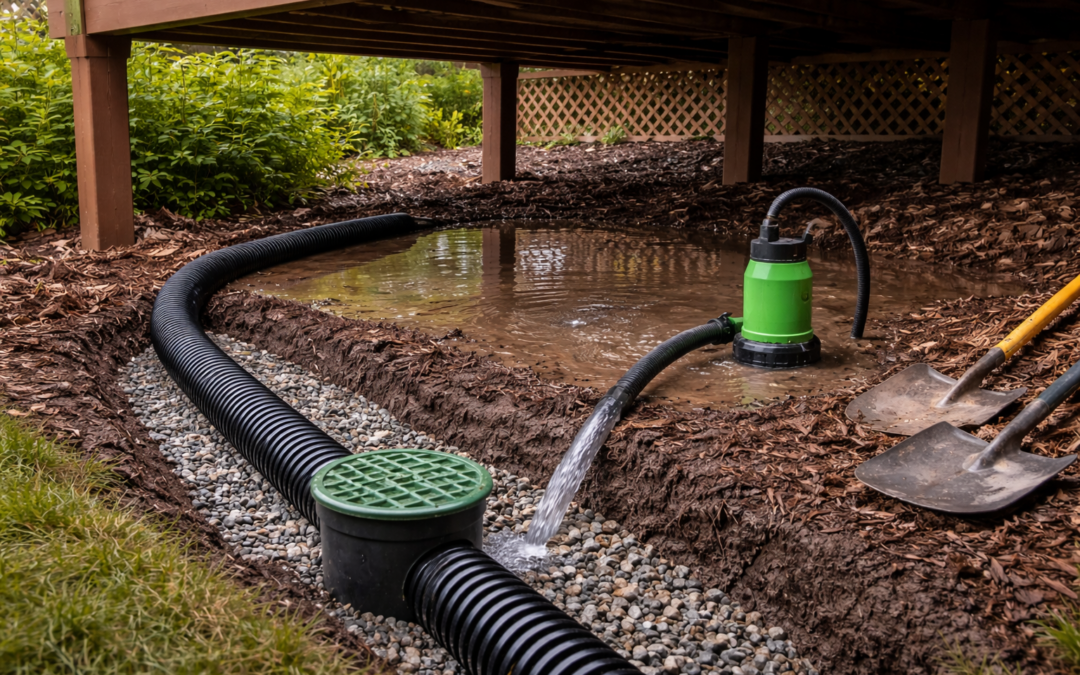
Raised deck gives it beauty, height, and additional space, which can be utilized below. However, water standing beneath may easily become an issue when not addressed. It draws pests, decays wood, and can even destroy foundations. When you see puddles or dampness, deal with it early.
Why Standing Water Happens
Standing water under a deck is normally caused by poor drainage or water run-off. Common causes include:
– Saturating heavy rainfall.
– Unsuitable deck slope, resulting in the accumulation of water.
– Obstructed guttering or downspouts.
– Compaction of soil inhibits the uptake of water.
– Landscaping nearby, which leads to the deck with water.
Enhance Drainage around the Deck.
The initial move is to allow the water to drain off the deck in its natural way. You might:
– Divert downspouts to flow off the deck.
– Install a drain trench or drainage channel.
– Have a French drain installed to direct water.
The easiest, most efficient solution is to make a small incline not towards the deck so that the water will automatically flow towards a drainage point.
Install Gravel or Stone Below the Deck.
The wet soil should be substituted with gravel or crushed stones to enhance drainage and reduce the possibility of mud or puddles. The gravel also deters weeds and makes the area under the deck cleaner.
To offer a more lasting solution, overlay the ground with some landscape fabric and then place gravel. The fabric prevents mixing of soil with the stones and makes the area dry.
Apply a Drainage Mat or Deck Underlayment.
Under the deck is a drainage mat or underlayment that forms a small air gap between the floor and the ground. This is where water is able to pass through and drain, avoiding moisture from entering the structure and lowering the risk of rot and mold.
Make sure that there is good ventilation of the deck.
A lack of airflow under a deck causes dampness and rotting of wood. To ensure the deck is dry, ensure that it is well ventilated:
– Spacing between deck boards.
– Clean out the bottom.
– Do not store objects that obstruct air circulation.
Dampness can be evaporated by proper ventilation.
Put In a Waterproof Barrier.
In case water under the deck continues to occur, place a waterproof layer. Waterproof sheets/membranes can prevent the absorption of water in the soil. This comes in handy where the deck is above a basement or crawl space.
Turn a Problem Into a Feature
Rather than perceiving standing water to be an inconvenience, consider it as an opportunity that makes your outdoors better. The water can be seen where it accumulates, and by repairing it, your deck space will look better.
In addition, too much water can be absorbed by inserting a rock garden or flower bed that is friendly to rain. This will address drainage, beautify and add value to your house. The deck can be a masterpiece of a balanced outdoor environment with proper design.
A Basic Renovation with Longer Life-span.
In case your deck is placed in a wet area, place ground cover that can withstand water. River rocks, pea gravel, or pervious paving allow the water to pass through them and prevent mud.
The upgrade is also a nice long-term solution since it limits the erosion as well as prevents weeds, and leaves the area in a clean condition. It is slightly expensive but it gives superior appearance and duration, which homeowners desire in a stable ,attractive deck.
Final Thoughts
Water below a deck is not merely an inconvenience–it may ruin the deck in time. The silver lining is that, when it is properly drained and taken care of, the area will be dry, safe, and operational.
If you need immediate professional assistance, call Decks N Stones right away.
These professionals can examine your deck and suggest the most effective drainage system according to your property.