
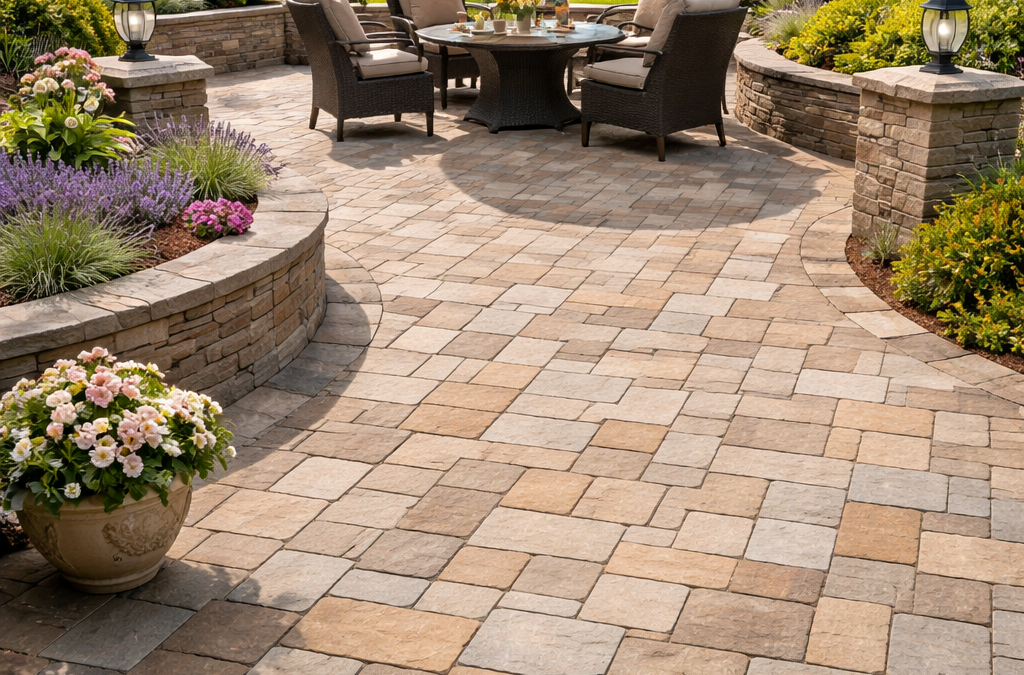
We all know how a beautiful patio can become a slippery danger in winter. The presence of ice, frost, and incessant moisture minimizes grip and puts a person at risk of falling. This is a safety issue for the homeowner in addition to a maintenance problem.
However, there is a promising point!
The winter patio traction could be enhanced through the appropriate strategy. A little clever reconfiguration will allow you to make your outdoor area simpler and more secure during the low-temperature season.
Our team at Decks N Stones regularly encounters instances of such a traction problem where people have broken their patios due to negligence. The first step towards protecting your patio surface, in the long term, is to understand the impact that winter has on it.
Why are Patios Slippery in Cold Weather?
In winter, the moisture is trapped within the minute pores of the pavers, stone, and concrete. That moisture becomes frozen when the temperatures drop. Consequently, there is deposition of thin ice on the surface. Frost may also decrease grip when there is no ice present.
Also, moisture is collected by fallen leaves and dirt. When they become older, they form a slick film which is more hazardous in cold conditions. Hence, a combination of weather and inadequate preparation of surfaces is a major cause of winter traction issues.
1) Begin with a Good Surface Cleaning
In the period when winter has not set in completely, it is time to clean your patio. Wet or frozen dirt, algae, and moss further increase the slipperiness of surfaces. The removal of them enhances traction instantly.
A light pressure washer would remove debris without any damage to the surface. In the case of delicate stone, low-pressure cleaning is the one to use. Once it is cleaned, leave the patio to dry. This measure prepares the surface for any other treatment and avoids the trapping of moisture.
2) Apply the Right De-Icing Techniques
Most house owners are using salt to melt the ice. Although it is fast, it is damaging to pavers and natural stone. Salt weakens the joints as well as leads to scaling of the surface in the long run. It is hence significant to have safer alternatives.
Other options that are less destructive are calcium magnesium acetate and calcium chloride. They have lower temperatures of work and less surface wear. When applied lightly, they will ensure traction without damaging the integrity of your patio.
3) Enhance Surface Sealer with Grip
Protection is usually linked with sealers, which can also enhance traction. Other sealers in modern use have anti-slip additives to provide a slightly textured finish. This texture provides more grip when the surface is wet as well.
Sealing is also resistant to the absorption of water. Consequently, less ice is formed on the surface when it is in freezing conditions. A sealer will not only prolong the life of your patio when installed correctly but also make it safer in winter.
4) Prevent Drainage Problems
Poor drainage is a contributing factor to slippery pavements. Water now has no where to go, and thus it freezes. In the long run, this loop becomes harmful to the surface and causes slips.
Check your patio slope and landscape. The water must never run along the surface. In case there is a problem with drainage, some minor changes can have a significant effect. Enhanced runoff decreases ice formation and enhances natural traction.
5) Select Winter-Friendly Patio Mats and Runners
Outdoor mats can be used when there is heavy traffic to give instant traction. These mats are meant to accommodate moisture and cold weather. They also limit the direct contact between shoes and ice.
It is particularly useful to put mats at doors and seating places. Nevertheless, they need to be in place. Loose mats may move and pose new risks. When properly utilized, they bring in safety and comfort.
6) Repair Irregular or Broken Sections
Water is trapped in cracks, sunken pavers, and uneven joints. These points are the first to be frozen in winter and are more likely to be slippery. So, it is necessary to repair surface damage prior to winter.
Correcting loose pavers and filling gaps enhances stability. Flat, smooth surfaces have a better ability to shed water. This decreases the ice growth and enhances general traction in low temperatures.
7) Repeat a Yearly Winter Care Routine
Stability is important as far as safety on the patio during the winter is concerned. Early clearing of snow helps to avoid the formation of ice under. Heavy scraping is not good enough compared to the light shoveling that may harm the surface.
A safe de-icer can be used after snow removal to ensure grip. Periodic checks enable you to deal with issues early enough before they become serious. Your patio can be used all winter with adequate care.
Smart Preparation Is the Key to a Safer Patio
There is no single fix for improving patio traction in winter. Rather, it needs careful planning and constant attention. Cleaning, sealing, good drainage and gentle de-icing are all subjects that help to minimize risk.
At Decks N Stones, we believe that beauty should not be compromised in the name of a safe patio. It is possible to have both with the right strategies. So, plan ahead, clean your patio, and keep it secure even during the coldest months.