
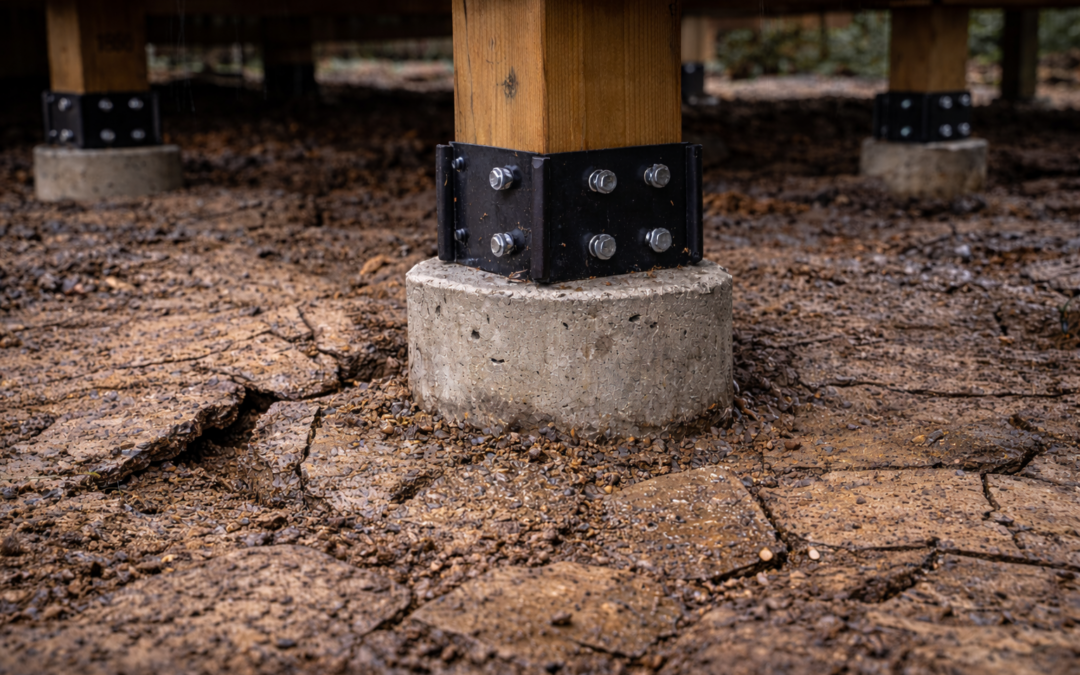
A deck is not a mere outdoor area but a place where people can relax, entertain and enjoy their backyard. However, the base of your deck, especially the footings, is a very important factor in determining whether it will be safe and stable in the long run.
The movement of soil, whether as a result of frost, water or natural settling, may cause a shift in your footings and compromise the structure of your deck. Thus, to avoid a short life of your deck footings, it is important to protect them against these forces. Here is how people can ensure the protection of their deck.
Understand Soil Movement
It is best to first understand what causes soil to move before getting to the prevention. Moisture changes tend to initiate soil expansion and contraction. As an example, the clay-based soil will swell when it is wet and shrink when it is dry, causing an imbalanced force on the deck footings. In colder climates, frost heave happens when soil water freezes and expands, forcing the footings up.
Likewise, poorly compacted soil or rainwater erosion may lead to settling or tilting with time. The first step towards constructing a deck that can resist natural soil changes is to identify these risks.
Selecting the Right Footing Type.
Footings are not all equal. Footing is determined by the type of soil, climate and size of deck.
Concrete Piers: These are popular as a stabilizing option. Poured beneath the frost line, they inhibit frost heave and offer a solid foundation.
Helical Piles: These are made of steel and are screwed into the soil, hold the deck firmly in place and are used in loose or shifting soils.
Sonotubes: These are circular shapes, stuffed with reinforced concrete, which work well when laid at the right depth and with adequate reinforcement.
The choice of the footing type will not only be stable but also be in line with the local building codes and safety standards.
Digging Below the Frost Line
The problem of frost heave can also pose one of the largest dangers to deck footings in cold areas.
To prevent movement:
> Establish local frost depth by building authorities.
> Dig footings beneath the frost line, which is normally several inches below the deepest frost.
> Use compacted soil or gravel as a backfill to fill any gaps that might settle with time.
This technique will reduce the chances of your deck lifting, tilting or cracking as a result of the freeze-thaw cycles.
Enhancing Drainage using Gravel.
The existence of water around footings increases the movement of the soil. Each footing is covered with a gravel or crushed stone layer to enhance drainage and stability.
- This facilitates water drainage, eliminating water saturation.
- Lessens the soil expansion on the sides.
- Forms a strong foundation that supports uniform weight.
In most cases, gravel measuring 4-6 inches is a good layer to ensure the footings are not moved by moisture.
Strengthening the Footings to be Stronger.
Footings made of concrete may not need to be replaced in a few decades when properly reinforced.
Tensile strength is incorporated by the inclusion of rebar or wire mesh to prevent cracking:
Vertical rebar is passed through the pier, enhancing support.
Horizontal rebar does not allow sideways soil pressure.
Proper location ensures the footing is intact even in changing soil.
Large decks or soil with high proportions of clay are particularly important when it comes to reinforcement.
Protecting Footings from Erosion and Moisture
Water can also overcome even the best footings. There are easy measures you can take to lengthen their lives:
Place a concrete surface under a waterproof coating.
Waterproof the area around the deck by grading.
Plant trees or shrubs not too close together, as roots and excess water can destabilize soil.
Such minor steps should help avoid expensive repairs and ensure the stability of the deck for many years.
Routine Inspection and Maintenance.
The prevention does not stop at the installation. Periodically check the deck footings that are in motion, cracked or tilted. Structural damage can be eliminated by dealing with minor problems at the first stage. Seal in any eroded ground, inspect drainage installations and re-adjust posts when slight settling takes place.
Final Thoughts
The safety of your deck footings against soil movement involves planning, installation, as well as proper maintenance. Selecting the appropriate footing type, excavating below the frost line, concrete reinforcement, and proper drainage will keep your deck safe, level and durable for years.
In case you require professional help in construction or strengthening your deck, Decks N Stones offers expert services that help to withstand soil movement and environmental conditions to make your outdoor area not only beautiful, but also stable.