
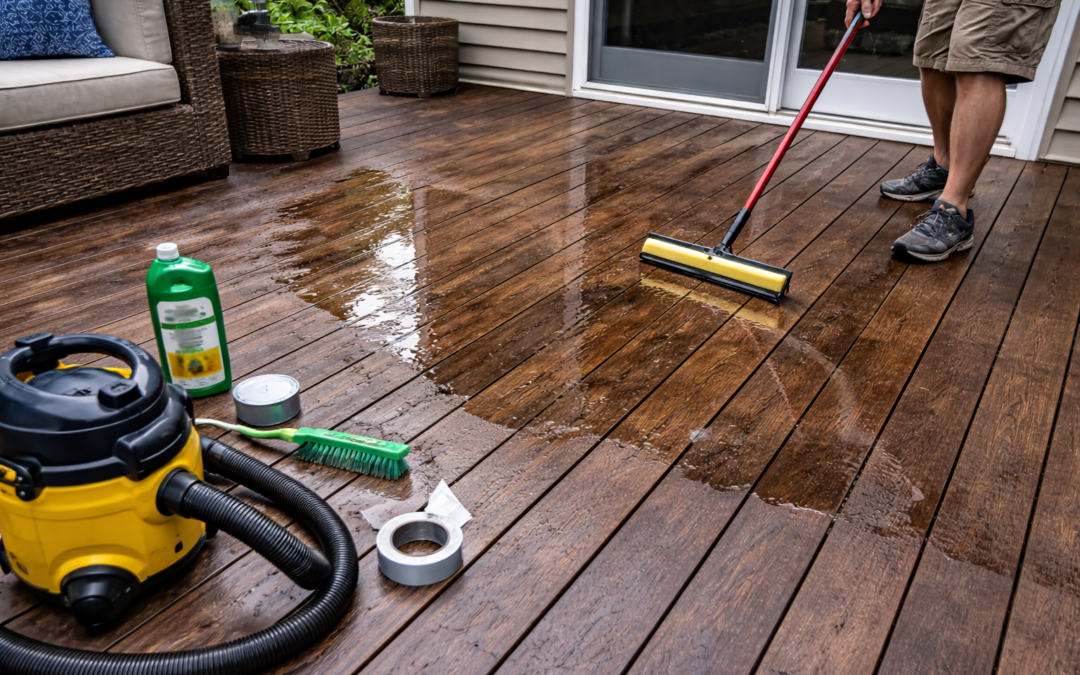
Does your deck turn a little pond every time it rains? The standing water is more than a nuisance. It leaves the surfaces damaged, creates slipping factors, and leaves your deck short-lived. Luckily, pooling can be avoided by the corrective action and time-conscious repair.
Why Water Pools on Your Deck
A problem with the design or installation of water pooling is typical. A deck needs to drain its own water. When it does not, water remains in depressions. This deteriorates materials in the long run and encourages mould.
Improper Deck Slope
A deck should be sloped so that it can drain. When it is flat, there is no place where water can accumulate. There is pooling even when there is a slight error of levelling. This is typical on older decks or home constructions. Good grading allows the easy flow of water.
Obstructed the interstitial spaces between plank boards
Small gaps should be there between deck boards. These holes allow water to pass through. Water is stagnated when debris clogs it. The common culprits are leaves, dirt, and pollen. Keep the gaps clean by washing every day.
Settling and Foundation Movement
The movement on the ground influences the deck stability over time. The soil swells and shrinks with the weather changes. Moreover, this provides unequal surfaces. The depressions are caused by the accumulation of water. The foundation settling is particularly prevalent in the high-moisture areas.
Poor Drainage Below the Deck
What goes under your deck is of great concern. When water is not able to escape underneath it rises. The drainage of the soil is poor and develops moisture. This results in pooling above and rot below. The deck is kept healthy by a dry foundation.
Dangers of Leaving the Water to Stand
Surface damage is not the only damage caused by standing water. It accelerates the rot and corrosion of wood. Moreover, mold and mildew is another growth in a damp environment. Smooth floors contain more risks of injuries. Costly repairs come as a result of years of neglect.
Enhance Deck Drainage with Slope
One of the solutions is to repair the slope. In addition, professionals can re-plan or re-surface the decking. A low angle allows the water to flow naturally. The fix enhances functionality and safety.
Keep Spacing Deck boards Clean
Regular washing prevents debris from flooding cracks. Clean with a broom or a pressure washer. Do not drive dirt further into the joints. Clean boards allow the rainwater to pass through quickly. The habit reduces pooling drastically.
Install Deck Drainage System
The contemporary drainage systems are sound. Also, they gather and divert water off the deck. They safeguard the stabilizing framework. The basements and patios are also kept dry by drainage. This upgrade is a value addition over the long-term.
Cover and Seal Surfaces of Decks
The deck is covered to prevent absorption of water. Sealants that are of high quality form a protective coating. Further, they assist in the water running off rather than soaking in. Frequent sealing also improves appearance and longevity. Reseal after every few years.
Repair Wavy or broken Deck Boards
Distorted or broken boards hold water. Change boards that no longer lie flat. Tighten loose boards. Moreover, a level surface that is smooth enhances the flow of drainage. Rapid solutions prevent future pooling.
Enhance Ground Drainage beneath the Deck
Drainage at the deck is important as well. Provide gravel or drainage systems. Additionally, ensure that the soil slope is away from the structure. Move downspouts outside decks. These measures minimize unnecessary exposure to water.
When to Take Professional Help
Certain drainage issues require professional gaze. To make structural changes, it takes expertise and accuracy. Furthermore, the experts identify underlying problems quickly. Their repair extends further and safeguards your investment. Safety and compliance are guaranteed by expert assistance.
Final Thoughts
When there is a pool of water on your deck, this is a good pointer. But it is not permanent. Your deck can be kept dry with an adequate slope, maintenance, and upgrades in drainage. Thus, the drained-in deck is nicer to look at, longer-lived, and safe all year round.