
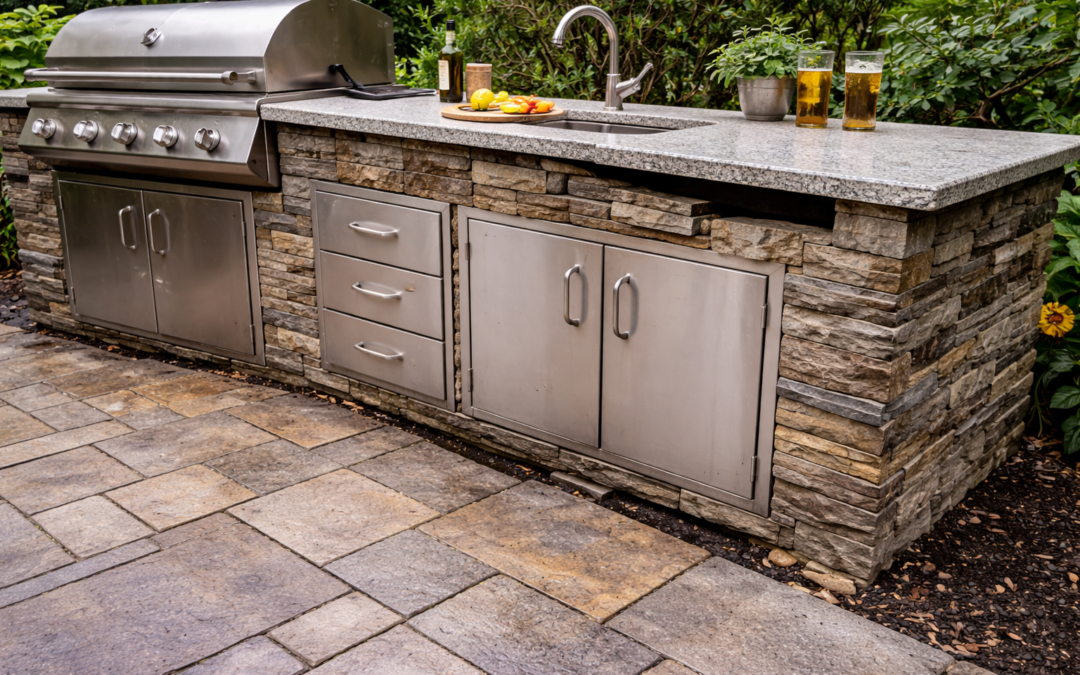
Do you feel that your outside kitchen is a little off every time you cross it?
It is not only in your imagination that you feel uneasy. An outdoor kitchen is another issue that many homeowners have to deal with. The surface can, over time, change due to some hidden factors. The upside is that the majority of leveling problems can be corrected using the appropriate method.
Weak Base Preparation at the time of Installation
Unless the base is developed correctly, outdoor kitchens are uneven. Unless the ground is compacted, it will collapse in the long run, and pavers or slabs of concrete will sink. This issue usually manifests itself several months post-installation. Long-term stability requires a strong base.
Problems of Soil Erosion and Drainage
Water is a silent troublemaker for outdoor structures. Inadequate drainage causes water to erode the soil under the kitchen, forming voids that subside or incline. The problem is exacerbated by heavy rain and melting.
Natural Ground Settling Over Time
Even the best installed kitchen will move with soil swellings and contractions with fluctuations in temperature. Freeze-thaw cycles, as found in most of the U.S., gradually lower the stability of the ground. Settling results in sloping surfaces over time.
Structural weight and Heavy Appliances
Outdoor kitchens carry a huge weight. Pressure on the base is created by grills, stone counter-tops, and pizza ovens. In case the foundation is unable to sustain this weight, sections of the kitchen sink may collapse. The imbalance of weight causes one of the areas to fall at a faster rate and forms observable slopes and cracks.
Roots and Underground Movement
The roots of the trees increase where water exists. When they spread under your kitchen, they are capable of pushing up the surface. When the roots break away or move later, the levels become uneven due to the formation of a void. This is a common underground activity that is not taken into consideration during installation.
Indications of an Uneven Outdoor Kitchen
The appearance of uneven lines of grout is an early warning. Doors or drawers can fail to close. Paving and countertops can have cracks. Another warning is standing water following rain. These problems indicate that there is a leveling problem that requires to be addressed.
Repair an Uneven Outdoor Kitchen
The repair process is based on the severity. Re-leveling pavers may be all that is needed to fix minor sinking. There is a new base required in order to solve serious problems. First, gently remove the affected materials. Then re-cover the foundation with compacted gravel and sand.
Leveling Pavers and Stone Surfaces
Lift sunken stones and wash the place down. Add new base material and press it hard. Put the pavers into their place again and position them in a proper manner. Check level to ensure precision. Complete by putting joint sand so that the surface gets firm.
Repairing Drainage to avoid Future Problems
Long-term success requires proper drainage. Install slopes that will lead the water off the kitchen. Think of the drainage channels or gravel boarders. Such solutions deflect water in an efficient manner, avoiding erosion and subsequent sinking.
When to Call Professionals
Certain repairs need special knowledge and equipment. Big outdoor kitchens can be in need of a structural evaluation. The professionals guarantee proper grading and load support, which minimizes the risks of the future and saves money. Safety and appearance also get enhanced by expert repair.
The beginning of prevention begins with the quality materials and correct installation. The base should be well-compacted. Cover the seal surfaces with it to diminish the absorption of water. Arrange periodic checks. Minor modifications today prevent big changes in the future.
Final Thoughts
An uneven outdoor kitchen affects both safety and enjoyment. However, the causes are usually clear and repairable. With proper leveling and drainage solutions, your space can be restored. A stable outdoor kitchen adds beauty, comfort, and lasting value to your home.