
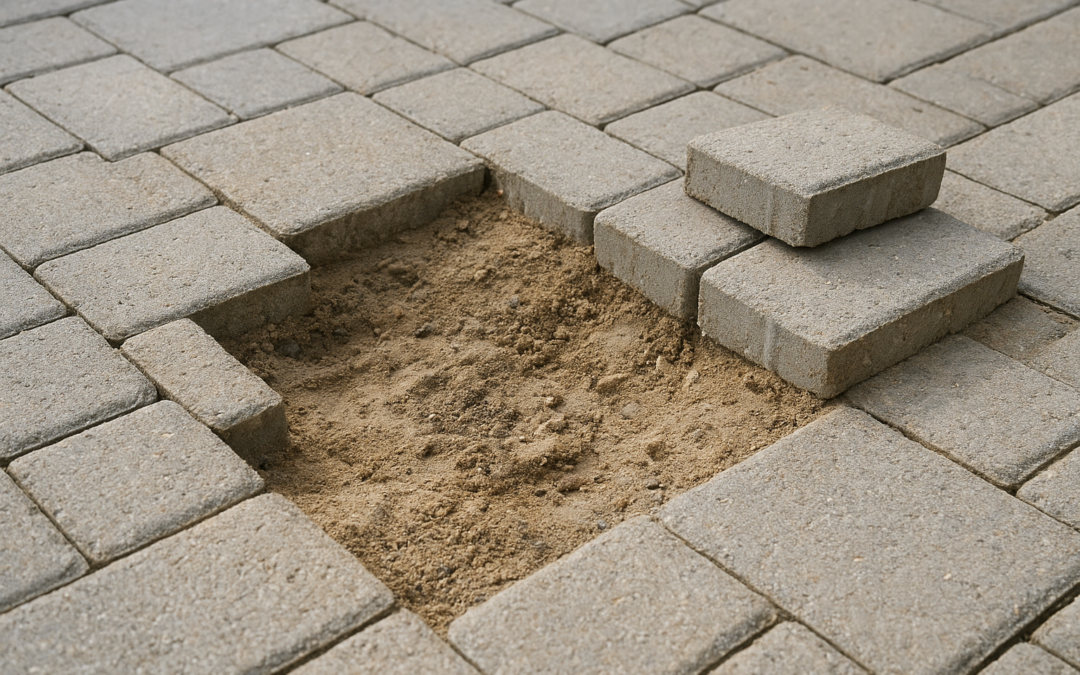
Have you ever gone outside after a downpour and discovered half of your paver sand washed off?
It is irritating and it is similar to having your patio melting with every storm.
But Relax!
The positive side is that you are not the only one and that the issue can be completely corrected.
When you know why it happens and how to deal with it, then it is so easy to keep your pavers strong, stable and clean.
And we will get it down in an easy-going manner.
Why Does Paver Sand Wash Out?
It is better to understand what is actually causing the sand to move before rushing into solutions. Most of the homeowners believe that it is a simple wear and tear, and there are usually underlying problems.
Heavy Rain and Water Flow
When it rains, water is quite strong, particularly at a high rate. The water that accumulates on your patio or walkway will not drain, and this will cause the water to run and drag sand away. With time, sand gets thin and your paving gets loose or dislodged.
Poor Slope or Grading
When it was not installed at the right slope, then the water would not run away. Instead, it gathers, drips under, or forces sand into the air and upwards.
Using the Wrong Type of Sand
Sand, which is available regularly in the hardware store, is not tough enough to secure pavers. It does not stick and may blow or be washed away very easily. In the absence of a stabilizing agent, the joints remain loose, and hence your pavers are exposed to erosion.
High‑Traffic Areas
Foot or vehicle traffic replaces sand more rapidly due to driveways, walkways, pool areas, etc. Sweeping it too roughly or using a blower as well can wear it out gradually.
Lost or broken Edge Restraints.
The pavers are side locked using edge restraints. When they are lost, broken, or not fixed well, sand is always moving and dripping along.
The Importance of Stabilizing the Sand
It is not merely that washed-out sand is an eyesore, but causes larger structural problems.
Pavers are loose or lumpy.
There are weeds in the joints that are empty.
Water begins to collect below the surface.
The whole space becomes a hazard in tripping.
It becomes costly when it comes to replacement or repairs.
One of the simplest methods of safeguarding your investment and lengthening the existence of your outdoor space is stabilization of the sand.
Preventing the Washout of Your Paver Sand.
Now comes the good news: you do not have to redo your whole patio. Erosion can be prevented and your paving can be cleaned and restored to its strong condition with the right approach.
Switch to Polymeric Sand
The gold standard currently is polymeric sand. It has fine particles with polymers, which harden after being activated with water. Imagine sand turning into a permanent, joint-binding substance.
Benefits
Creates a strong connection among pavers.
Withstands precipitation, wind and erosion.
Minimizes weed growth,
keeps antsfrom burrowing off.
Maintains the surface in a nice and tidy appearance.
When your existing sand continues to get washed away, then it is a straightforward indication that polymeric sand is the upgrade you require.
Improve the Drainage in the Area.
The major problem of sand erosion is due to improper drainage. Having a good slope and water flow will also be significant.
Easy fixes include:
Making of a low slope in the absence of buildings.
Installation of a drainage channel.
Laying gravel bed below depressions.
And as far as places where water always pool.
Improved drainage = reduced erosion and longer-lasting pavers.
Fill and Compact Sand Correctly.
The finest sand will not last long unless it is properly laid down.
Steps professionals follow
Clean the joints thoroughly
Apply new polymeric sand.
Flatten the surface to remove cracks.
Add a second layer if needed
Turn on with water with a light shower.
Compaction, when done properly, allows the sand to get deep into the joints and stop early washout.
Repair (or replace) Edge Restraints.
When your paver edges are not fastened, everything inside starts moving. New and strong edge restraints hold the sand fast and do not allow the base to move.
Take an example of a Joint Stabilizing Sealer.
In case you want to use normal sand, a stabilizing sealer will aid in cementing sand. These sealers:
Harden the sand
Reduce weed growth
Help the sand resist washout
They are, however, not as strong or durable compared to polymeric sand, but have the ability to serve as a temporary solution.
When It’s Time to Call a Professional
DIY may apply to small spaces; however, when:
Your pavements are sinking, drifting, or uneven.
The issue of drainage is severe.
Sand has been eroding out time and again.
Gaps are deep, and there is growth of weeds.
Then professional assistance will conserve you time, money, and frustration. Professionals are able to identify underlying causes, regrade the field, refill the joints, and put your space back to a steady, polished look.
Key Takeaway
Paver sand washing out is a very common problem, but it doesn’t have to be an ongoing battle. With the right sand, proper drainage, and a careful installation process, your pavers can stay strong, beautiful, and well-aligned for years.
A little attention today prevents expensive repairs tomorrow and keeps your home looking its best.
Need professional restoration? Decks N’ Stones can fix your pavers and stabilize your sand with long-lasting results.
Book your service today!