
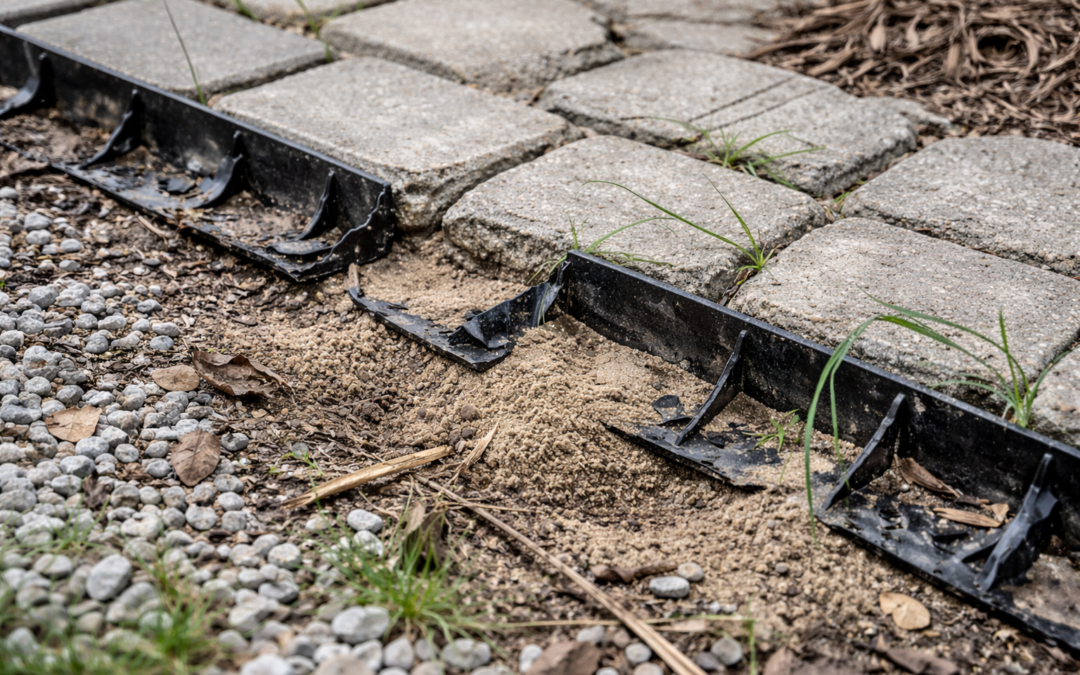
Have you observed that your pavers are gradually moving or sinking out of position? In most instances, failure of edges is the actual problem and not the pavers. Paver edging is needed to ensure the stability of your patio, walkway or driveway. Moreover, once it ceases to work, the entire surface becomes susceptible to change in shape. The ability to know the next step would save money in repairs.
Learn Why Paver Edging Fails
It is good to understand the reason behind the problem before correcting. Thus, learn why the paver edging fails. The paver edging mostly fails due to improper installation, soil movement, or stress due to weather. Additionally, the ground can be weakened by freeze-thaw cycles, heavy rainfall, and foot traffic. In case the base has not been compacted, the edging will move or crack. Plastic edging is prone to breaking and metal edging can bend unless anchored.
The Early Warning Signs
Failure of paver edging hardly occurs in one night. Generally, the symptoms are indicative. Pavers can be dispersed and they leave gaps that are uneven. When you step on the edges, it may be loose, or you can see the edging sticking out of the ground. It may start to slope off on the surface, particularly on borders. The earlier these signs are picked the easier and less expensive the repair becomes.
Determine the Level of the Damage
When something is wrong, stop and evaluate the seriousness of the issue. For minor movement resetting and reinforcing the edge could suffice. Where the edging is cracked, warped or worn away, replacement is generally preferable. Also check the paver base. The eroded or irregular bottom implies that it will not be sufficient to repair only the edging.
Take away the broken Edging Very Carefully
In case of any necessity of replacement, one should begin with removing the failed edging carefully. Gently lift it so as not disturb the pavers around it. This allows you to have a look at the space near the edge. Soil, rubbish, or roots should be removed. There is a clean edge that offers simple and long-lasting installations of the new edging.
Rebuild and Compact the Base
A strong foundation is one of the important requirements of long term success. Following the removal of the edging, compact the underlying soil. Provided that the area has sunken, put in crushed stones or gravel and press down. This would establish a stable base, preventing future changes. Skipping this step may result in repeated failure.
Install Edging The Right way
The selection of the material is important. Curves are well done with plastic edging. The straight edges are very strong with aluminum or steel edging. Concrete edging is useful at high traffic areas. Whichever one you like shall fit into the pavers and fix it in place. Strike downwards or push stakes until the edge is secured.
Reset and Secure the Pavers
As soon as the new edging is laid, reposition any loose pavers on the edge. Ensure that they are seated level up and in line with the entire surface. Sprinkle with joint sand on top of the pavers and press down. This is the final process that secures the pavers and provides them with additional stability.
Eliminating Future Edging Failure
Prevention beats repair. Small problems are prevented by regular inspection before they develop. Allow heavy water run off not to affect the edges since moisture causes weakness of the base. When your walking path or patio is heavily used, invest in heavier edging. Good drainage and periodic maintenance increase your installation’s life.
When to Call a Professional
A few edging concerns are easy to resolve; some give indicators of a bigger problem. In case the bases move in large chunks or the base is completely damaged, professional assistance is desirable. The seasoned installers will be able to identify the underground issues and offer more sustainable solutions that will safeguard your investment.
Paver edging probably does not have a noticeable significance, but it glues it all together. Quick fixes prevent the aesthetics and stability of an outdoor environment, making it safe, attractive, and useful over the years.