
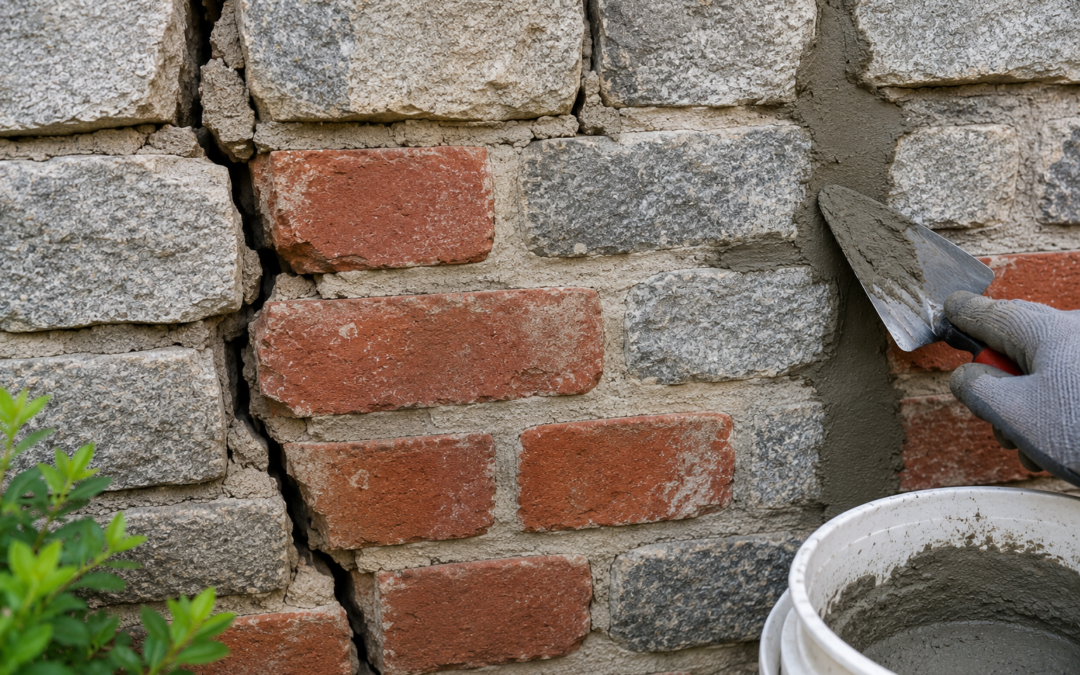
You may think that you have a small crack in your masonry, but that’s not necessarily true. But it doesn’t usually last. The smallest fracture will get bigger and let in moisture over time, and reduces the overall strength of the structure. That’s the reason why early repair is not only suggested, it’s crucial. Fortunately, if you take the right steps, you can prevent it from causing any real damages or costing you a significant amount of money.
The causes of Masonry Cracks.
It is important to first understand the cause before jumping into repairs. The various natural conditions such as settling, temperature variations, and water exposure are all considered to be responsible for cracking at masonry. Building expansion and contraction cause stress to be generated in the materials. This stress manifests itself physically as cracks.
In other instances, faulty installation or old materials may also to blame. Though hairline cracks are often found wider or expanding cracks could be a problem that goes deeper. So, if you can determine the cause at an early stage you can go towards the solving of that problem.
So When Shall We Act?
Timing is a crucial part of most people’s lives. As soon as you see a crack coming, it’s a good idea to watch it closely. If it begins to widen, deepen, or spread on the surface it’s time to take action!
Also, cracks that permit water to get in should never be overlooked. Wetness can cause damage more quickly and be a cause for moulding or internal decay. Early action not only helps to prevent your masonry from damage but also avoids costly maintenance in the future.
Surface Preparation that is Correct.
In every type of repair, the first step is to properly prepare the job. First of all, thoroughly clean the cracked region. Clean up, cut out loose material and dust. This guarantees good repair compound bond.
Now, use an appropriate tool to slightly open the crack. This may sound like a contradiction, but it does make the filler stick more and stops it from sealing out. When this surface is clean and ready, you can continue on in your project.
Selecting an appropriate repair material.
It is important to choose the right material for maximum durability. High-quality masonry crack fillers and sealants help to repair small cracks. Such products are meant to swell and shrink while the surface is moving and avoid further damage.
If it is an extensive crack, a mortar mix or patching compound may be necessary. These provide additional strength and stability. Be sure to select the same type and colour of product for a smooth finish which integrates with existing masonry.
Repairing the Crack Step by Step
When the mixture is ready, carefully put it into the crack. Press it gently into it with a Trowel or applicator. This means there will be no air gaps.
Fill and smooth the edges; blend into the surrounding area. Let the repair cure by following the instructions on the product. Avoid excessive moisture and pressure on the area during this period.
With proper application, the crack will be sealed, and the structure will regain its strength.
Preventing Future Cracks
Crack repair is just a portion of the solution. It’s just as crucial to prevent future damage. First, take care of moisture issues around your property. Proper drainage and do not allow water to collect in areas near masonry surfaces.
Also, think about sealing masonry on a regular basis. A protective sealant can be used to decrease water absorption and increase durability. On a regular basis, you’re also able to identify minor matters before it spreads out.
Final Thoughts
Cracked masonry is more than just a cosmetic concern. If not treated, it can cause structural issues. Thankfully, timely repair is easy and handy if it is done right.
With a clear understanding of how to prevent cracks from spreading and the proper materials to use, you can preserve the investment and not ruin the structure.
Take action today—because a small repair now can save you from major repairs later.