
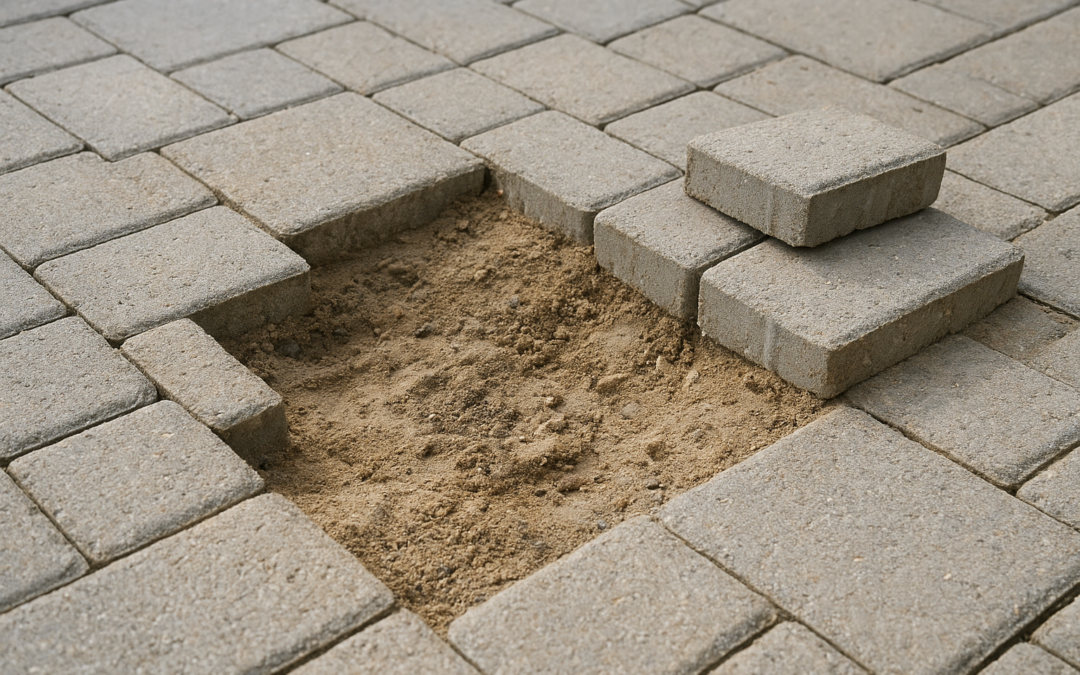
The initial symptom of a patio problem is hardly dramatic. It may start with a small unease in the foot-a slip that is somewhat out of step or a surface that is no longer in place as it once was. These minor inconsistencies are manifested, with time, as unevenness, a safety hazard and a source of visual annoyance.
Homeowners believe that all they need to do is to replace them but in most cases, the steps on the patio are uneven and thus everything does not have to be excavated. The article describes the reason why uneven patio steps can be repaired effectively, the causes of the problem, and why professional repair should be considered a more intelligent option instead of complete replacement.
Learning the Reason Patio Steps are not Strauss
Irregular patio steps are not due to the use of bad materials, but face ground movements over a long period of time. The soil under structures that are outside would naturally move due to moisture variations, temperature variations and compaction issues. The base on which the steps are placed becomes unstable and brings up the sections under or up.
Water matters a lot. The lack of drainage causes the supporting soil to be remodelled and the foundation of the steps to be weak. In regions with low temperatures, freeze and thaw processes further widen and shrink the earth, gradually placing strides out of order. The base may also be pushed up by tree roots.
It is important to determine the cause of the problem. But it will not pass any best repair, even when neglected.
Repair Is the Better Alternative to Replacement
Complete replacement may not be necessary particularly when the steps are structurally intact. When the materials are not critically cracked, broken or collapsing, repair solutions can bring it back to stability and uniformity.
Minor to moderate unevenness, sunken and raised edges can be repaired. Repurposing the current structure conserves resources, reduces labor expenses, and eliminates needless demolition. Professional inspection will determine whether it is a cosmetic, a foundational or a structural problem.
Industrial Leveling of Sunken Patio Steps
Sunken square concrete steps that are solid may be repaired using leveling methods. Stabilization of the soil at the base under the affected section lifts the part of the soil back to the original position.
Specialized compound or growing foam is placed under the concrete, occupying the gaps and pushing the step to become level. When complete, the step will come out straight and will evenly distribute the weight. This is an aggressive technique that requires minimal invasiveness and is much more effective compared to removing and replacing concrete steps.
Concrete leveling can offer long term path and regain access to the patio when it has been done in the right way.
Setting Stone and Paver Steps Anew
Paver and stone steps are effortless as they are dependent on the concrete foundation. In the process, when that base erodes or slides on uneven ground, the individual bodies move as a result of that shifting, and the heights of the steps become uneven.
Repair consists of taking away the dropped stones, making and compacting the foundation, and replacing the material at the proper position. Old stones are recycled, and the source of the inconsistency is corrected. The outcome is a visually homogenous series of steps, which merge harmoniously with the porch.
Fixing Simulated Step or Lifted Edges
It may also be the occasional non-uniform strides caused by a lift, as opposed to a sink. This frequently happens when the soil swells, and roots poke through on one side of the step. Where the height difference is much less, a surface correction can suffice.
Sharpening or flattening the elevation provides a smooth flow between the steps and increases safety due to a decrease in the risk of trips. This remedy is most suitable for small errors and ought to be followed with an analysis of the cause of the lift to prevent future occurrences.
Application of Drainage in the Stabilization of the Long-Term
The water will continue to damage the foundation even with the best repair. Adequate drainage is mandatory to ensure that patio steps remain flat over time.
Divert water out of steps, correct slopes, and improve soil quality in the area in front of the patio to safeguard the structure that has been repaired. Drainage and step repair fix the ground and reduce the chances of movement in later stages.
The Value of Professional Repair
Evening patio steps are not an aesthetic issue, but are a safety concern. Uneven riser height raises the risk of trip and fall, particularly in busy locations. Professional repair ensures that the steps are within uniformity levels and are safe.
Repairs at Decks N’ Stones begin with a structural approach rather than surface repair. The first step in the project is to determine the conditions of the soil, the material integrity, and the environment. This will enable the repair to include the problem as well as the cause of the problem, hence providing a permanent solution.
Final Thoughts
Uneven patio steps are not necessarily a replacement issue. Often, specific repairs can be made to achieve balance, ensure safety, and create a better appearance than is possible with a complete repair, and at a lower cost.
The trick lies in the ability to understand why it failed and to select the correct repair procedure and make sure the foundation under it is properly supported.
In case of homeowners who want lasting, highly qualified solutions, Decks N’Stones can provide specialists with repair options that will help to prolong the life of the structures of a house, keeping the unique image and strength intact.