
Did you notice?
The cracks that appear under pavers of the concrete may appear minor initially, but when they are not treated on time, they enlarge rapidly. This can be followed by irregular surfaces, loose paving stones, and water erosion.
The positive thing about them is that it is possible by using the appropriate strategy, to fix these cracks and prevent them, and have your patio, walkway, or driveway appear perfect and safe over the next few years.
What Makes Concrete Under Pavers Crack?
To initiate repairs, one should know the cause of the appearance of cracks. Pavers can crack concrete below them due to several factors:
Natural Shrinking and Settling – It may slightly shrink, forming small cracks as a direct result of the curing process. They can be aggravated over time by the flow of soil under the slab.
Heavy Loads- Driveways or patios that bear the weight of cars or heavy furniture increase the strain on concrete and cause cracks.
Moisture Damage -Water that gets into the concrete may freeze during cold weather, swell, and crack the slab. This is aggravated by poor drainage or standing water.
Inadequate Installation- Concrete placed without reinforcement or on loose soils is more likely to crack.
Getting to the bottom of the problem will allow you to select the most suitable repair technique and prevent such issues in the future.
Indicators that You Require to Fix Cracks under Pavers.
Not all cracks need an urgent response, yet some reflect an emerging issue. Watch for:
Cracks in between pavers: Suggestion of movement within the underlying concrete.
Wavy roads: Pavers that roll around or that are loose can be indicative of a defective base.
Widening cracks: Hairline cracks that expand rapidly are an indicator of more serious problems.
Water pooling: This can be water pooling on or around your pavers, which can indicate that there is water penetrating your cracked concrete.
Early detection of these signs will allow you to take action before repairing them becomes expensive.
How to Fix Cracked Concrete Under Pavers
The process of repairing pavers with concrete requires caution. This can be done in the following stages:
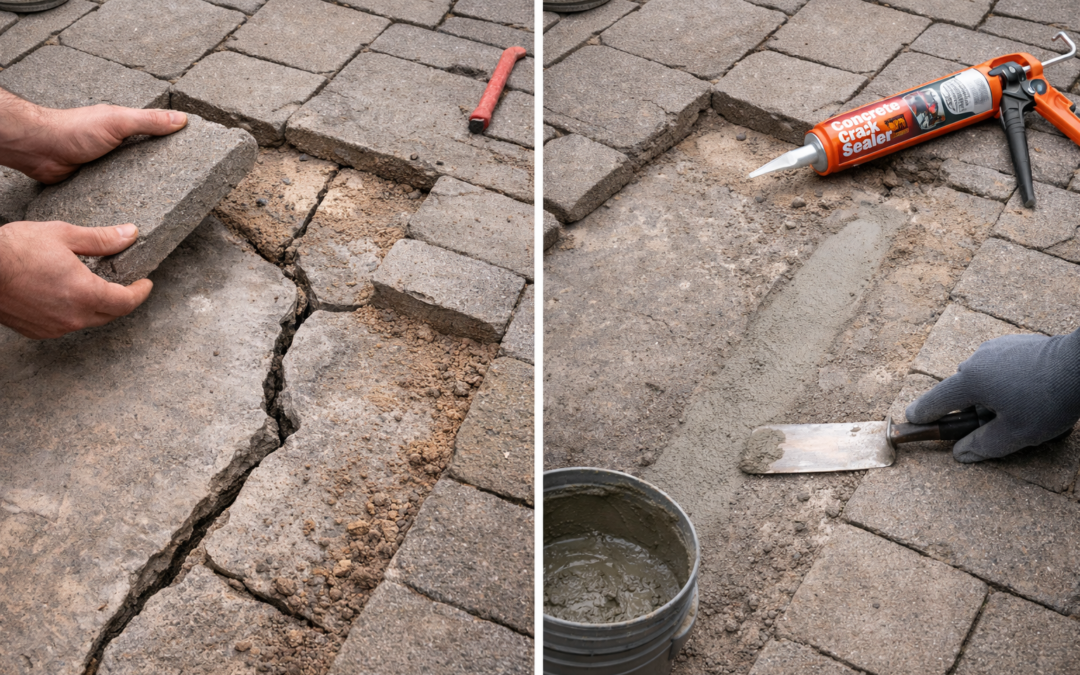
1. Remove the Pavers Carefully
Begin by picking up each paver using a pry bar or other such tool. Make sure that you do not break them. Keep them in a safe place; you will need them some time.
2. Clean the Area
When the pavers are off, sweep or remove debris, dirt and loose concrete. When one has a clean surface then the repair materials bond well.
3. Assess the Damage
Examine each crack. Hairline cracks can be repaired with a filler, whereas a wide crack may necessitate patching, or replacement of part of the slab.
4. Install a Concrete Filler or Patch
Mini cracks: Fill them with a concrete crack filler or epoxy sealant. Dot on using putty knife and make sure it gets into the bottom of the crack.
Wider cracks or spots: Prepare concrete patch based on the instructions on the manufacturer. Using a trowel apply it, smoothing it to the area around it. Before you proceed, it must be completely cured.
5. Level and Reinforce (Optional)
Provided that the slab is not uneven and is not damaged much, it is worthwhile to apply a thin layer of self-leveling concrete on the damaged part.
This forms a steady foundation. The cracks can be avoided by reinforcing with wire mesh or rebar, particularly in driveways or heavy-traffic areas.
6. Reinstall the Pavers
Once the concrete is dry, it is time to put the pavers back into their original positions. Have them sit squarely, and stuff the gaps with sand or polymeric jointing material so that they are fixed.
7. Maintain Proper Drainage
Water is one of the greatest agents of broken concrete. Ensure that the slope of your patio or driveway is not towards the buildings and that the water that is standing does not pool up. It is possible to add gravel beds or French drains to prolong the surface that has been repaired.
Preventing Future Cracks
It is only half the task to fix the issue. To make your pavers stand firm over time, follow these rules:
Never place undue weight on surfaces that are not intended to support.
Keep a check on the early signs of cracks or movements.
Seal pavers at intervals to prevent water from penetrating through the concrete.
Deal with draining problems early enough before the water causes other problems.
Final Thoughts
Paved cracks on concrete swell as they are neglected. With immediate action, correct repair methods, and correct drainage, you will be able to prevent additional damage. In this way, you can retain your outdoor area and keep it beautiful.
Be it a patio, walkway, or driveway, repairing the foundation before it deteriorates guarantees that your pavers will remain stable and firm over the coming years.
A little crack won’t make much of a headache. Seal it up today and have a smooth, safe surface tomorrow.