
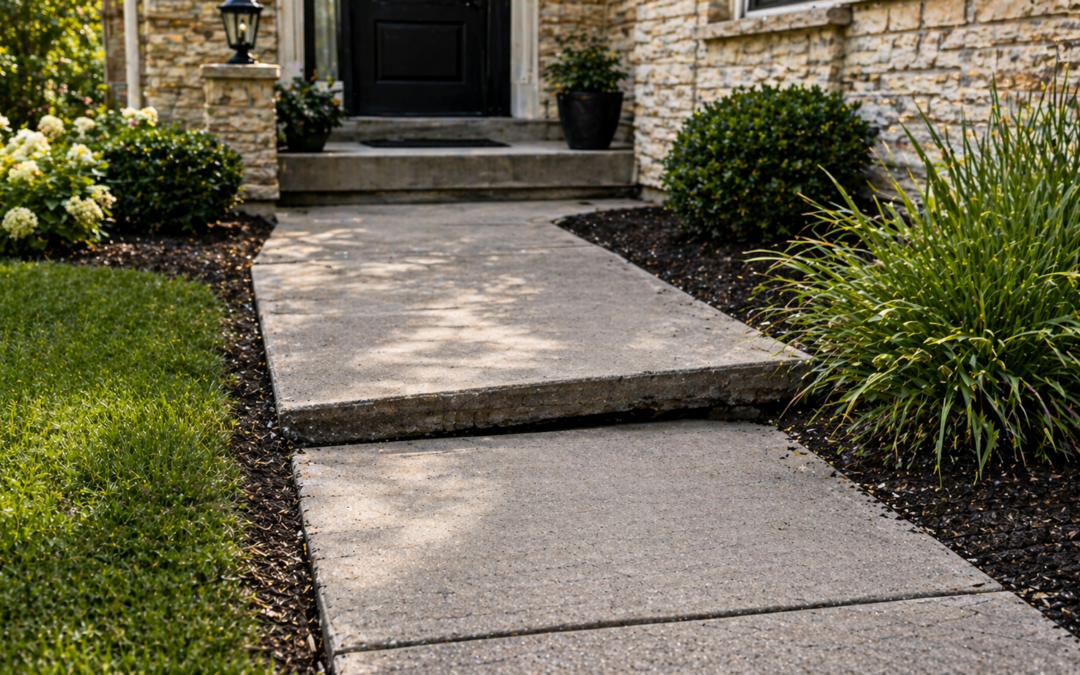
Front walkways are meant to guide guests to your door and create a welcoming first impression. But when parts of the walkway start dipping, shifting, or cracking, the entire entrance loses its charm. What seems like a small dip at first can quickly become a tripping hazard and an eyesore. Sinking walkways are more common than many homeowners realize, but the good news is that they can be repaired once you understand why they sink in the first place.
Walkway Sinking Causes
Below the surface, most sinking paths share a hidden flaw. Though the top layer seems solid, trouble brews beneath. Loose dirt often plays a key role here. If the ground wasn’t pressed down well when built, it gives way later. That shifting earth tugs the path along with it. Over months, that pull creates slants and bumpy spots where flat surfaces once were.
Water plays a big role, too. Where water moves steadily or pools beside the path, it wears down the earth below. Rain that falls hard, drains that fail, gutters that drip, or ground that slopes wrong – all let support vanish bit by bit. The moment dirt turns mushy, shifts, or vanishes, sections of the walk dip unevenly. One edge drops first, then others follow.
Roots sometimes shift the earth beneath. Though they might not crack slabs outright, their growth nudges nearby dirt out of place. That shifting leads to bumpy surfaces – or dips that appear overnight – based on root direction. Houses near big trees tend to notice shifts underfoot, subtly warping paths over time.
Years pass. Paths dip slowly. Rain, pressure, shifting earth – these reshape the ground beneath. A solid path might still shift, just a bit. Yet once slanting edges catch feet or tilt too far, repair makes sense. Fix comes after risk shows itself.
Sinking walkway risks are often overlooked
Now here’s something folks often overlook – that slight dip in the sidewalk seems harmless at first glance. Yet trouble starts when stepping becomes stumbling, particularly for kids dashing around or older adults taking cautious steps. Picture rainwater deciding to linger right there by the house instead of draining away like it should. That puddle? It sticks around longer than welcome, creeping into brickwork or sneaking under walls. Before long, what looked minor turns stubborn – dampness sets in, then tiny splits grow where none were before.
Later on, fixing things might cost way more if nobody does anything now. A tiny sag today could turn into a huge broken patch tomorrow. Get it handled fast – repair jobs stay simpler and cheaper that way.
How to Repair a Sunken Walkway
Heavy settling? The fix hinges on depth plus root causes. Often, experts suggest re-leveling for lasting results. Slabs regain correct height through lifting – no replacement needed. Material injection sneaks under sunken sections, nudging them upward smoothly. Speedy cleanup follows, minus heavy tearing apart.
When a path has too many cracks to fix, swapping it out might work best. With the old material gone, workers can ready the soil underneath – packing it down well before setting fresh slabs or stones. Solid groundwork matters most; otherwise, the surface could dip later on.
Water that pools near paths causes trouble down the line. Tackling runoff matters just as much as patching uneven surfaces or putting in new slabs. Shifting flow off the path, upgrading gutters, and also reshaping how the ground tilts help stop damage before it starts. If moisture keeps building up, repaired pathways might drop once more despite fresh work.
Contact Decks’ N Stones Today
Sometimes a drooping path feels overwhelming, yet fixes exist. Decks N’ Stones steps in when sidewalks dip or crack. Homeowners get support through repairs built to last. Checking ground stability comes before adjusting tilted sections.
New installations happen if needed. Each step simplifies what could be messy. Safety matters just as much as how things look. No two houses match, so plans never copy one another. Results hold up over time without surprise issues later. Worries fade when work fits both land and lifestyle.
When steps dip or shift underfoot, that moment calls for a fix. Get in touch now so we can restore your entryway together.