
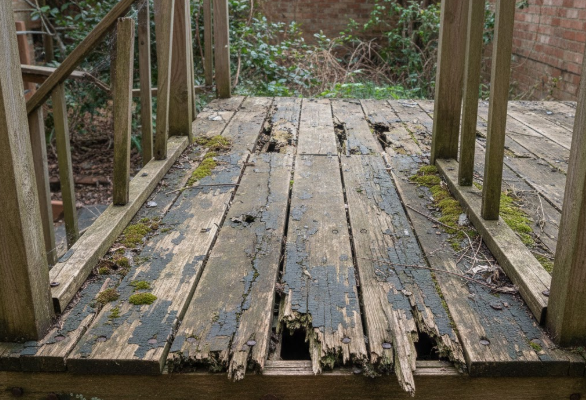
Even a pretty deck may soon become unsightly as the screws, nails and bolts begin to display unattractive rust marks. Rusted attachments not only impact the look of your deck, it can also deteriorate the stability of your deck in the long run. Homeowners often think that rust is inevitable in the outside world but the fact remains that most problems with corrosion can be avoided by selecting the right fasteners. The reason as to why deck fasteners rust and the best options to use will assist you in creating or repairing a durable deck.
Why Do Deck Fasteners rust so fast?
The deck fasteners are constantly exposed to the moisture, humidity, rain, and temperature fluctuations. When metal fasteners come into contact with oxygen and water, the chemical reaction will take place to produce rust. The outdoor setting can hasten this process, particularly in high-humidity, rainy, or coastal air.
The use of pressure-treated wood is also another typical cause of rust. This wood is composed of chemicals which keep it out of ways of insects and rot, but which are very corrosive to plain steel screws and nails. Corrosion may occur significantly faster than anticipated in the event of contact of the standard fasteners with treated lumber.
Another significant cause is cheap or low quality fasteners. A lot of decks are constructed using common steel screws which are of thin coats. When that coating is removed the rust develops rapidly and is spread over the deck surface.
The Impacts of Rusted Fasteners on your deck.
Rust is not merely a cosmetic problem. Corroded fasteners can become loose or break off in due course owing to loss of strength. This may result in the lifting of boards, squeak, or instability. Extremely, rusted fasteners may undermine the safety of the deck particularly in loading locations such as railings and stairs.
The rust stains may also leak into the wood creating dark stains that are hard to remove. This gives the appearance of your deck being old and abandoned though the wood may be in good condition.
What Other Fasteners Can you use?
The simplest method of avoiding rust and prolonging the duration of your deck is by selecting the correct fasteners. The most appropriate ones are stainless steel fasteners. They are highly resistant to corrosion even in wet or coastal conditions. They are more expensive than regular screws, but they have a better long-term value and durability.
Another good option is the hot-dipped galvanized fasteners. These fasteners have a layer of zinc that is thick and prevents the steel against moisture and chemicals in the treated wood. They are widely applied in outdoor projects and they are very resistant to rust.
Modern decking is also done with polymer-coated deck screws. These screws contain many protective coatings that prevent metal corrosion and they offer increased hold onto the wood. They are deck-specific and can operate in the majority of climates.
In high-priced or coastal decks, silicon bronze or copper fasteners may be used. These are natural corrosion-resistant materials, which provide good performance, but they are rather costly and are usually available in high-end projects.
The Importance of Matching Fasteners to Your Deck Material.
Not every form of decking will suit every fastener. Composite decking, such as, frequently uses special screws that do not mushroom and have a clean finish. The chemical composition of pressure-treated wood requires corrosion-resistant fasteners. Hardwood decks (ipe or teak) require robust and robust screws since the wood is dense and can easily break less strong ones.
Improper fasteners may cause early rusting, damage to the board and expensive repair. This is because matching the fastener type to your deck material will be more performance-wise and provide a professional finish.
Prevention of Rust in the Future.
Rust can be prevented even with high-quality fasteners by proper installation and maintenance. Do not put various metals together, and it may result in a phenomenon called galvanic corrosion. It is also important to keep your deck dry and clean to minimize moisture buildup. By frequently checking on them, you will be able to change any damaged or rusted fasteners even before they turn into a structural problem.
Final Thoughts
Rusty deck fasteners are a very common issue.
Finding the causes of rusting fasteners and the selection of anti-corrosion products, such as stainless steel, galvanized, or coated screws, can help you keep your deck safe through the years.
Well, investing in the right fasteners may cost a bit more upfront, but it saves money, time, and frustration in the long run while keeping your deck safe and beautiful.