
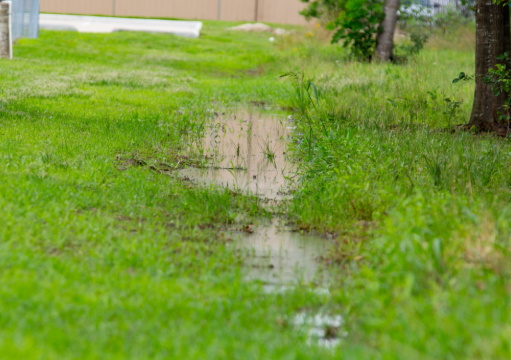
Having water in the yard is not just annoying, it may kill grass, breed mosquitoes and even make your foundation weak. Good news: this does not always require a large project in landscaping. Simple tricks and clever thinking will give you the ability to manage the excess water and ensure that your yard is healthy. The following is the solution of fixing standing water in your yard without any significant building.
Determine the origin of the Water
First, determine the cause of the pooling of water. Common causes include poor drainage of soil, depressions, clogged guttering or dripping roofs and driveways. Following a rain, observe the location and duration of water pools. You can choose the best solution by knowing the source.
Improve Soil Drainage
One of the major causes of standing water is bad soil drainage. When you have heavy clay soil, water cannot seep in quickly, and this will result in puddles. The second thing that you can do to enhance drainage is to aerate your lawn. Aeration is done by a manual or powered aerator that creates small holes allowing water to go deeper. The application of compost or other organic materials also loosens hard soil so that it can absorb water and result in fewer puddles in the long run.
Make Swales or Sunken Channels.
A swale refers to a shallow and smooth slant that diverts water off trouble areas. It does not require a lot of construction and only a shovel and some work. Install the swale in a way such that the water will drain into a secure drainage system, such as a garden bed or dry creek bed or storm drain. This guide of nature will carry away surplus water and leave your yard mostly the same.
Plant Rain Gardens.
Rain gardens are small beds that contain water-resistant plants that absorb rainwater. They are environmentally friendly and a means of water management, and also provide curb appeal. Plant native plants that prefer to be wet, such as ferns, sedges, or hostas, and place the rain garden in a place where rain is likely to gather. It eliminates the standing water and helps local wildlife.
Place a Dry Well or French Drain.
When the water continues accumulating in a single point, then a dry well/French drain can be considered. A French drain is an excavation of gravel and a perforated pipe that transfers water underground to a safe outlet. Water is gathered in a dry well and gradually discharged into the ground. Both are cost-effective and do not damage your yard, thus suitable for the owners.
Grading the lawn and landscaping.
A little adjustment of the slope of your yard can prevent pooling. Create a small pile or re-grade low areas so that they can flow naturally. The flow of water off problem areas can be assisted by even moving a few stones or rearranging flower beds. Be attentive in areas around foundations and patios to save your house.
Take Care of Your Yard.
Periodic maintenance is a major way of averting standing water. Clean gutters, clean up debris and make sure downspouts can drain off your house. Water and fertilize the lawn frequently to ensure healthy and well-draining soil. Minor, daily actions ensure that small water problems do not become one of the headaches.
The Bottom Line
Repairing standing water does not require costly constructions. You can control the water and also make your yard more beautiful and healthy by enhancing soil drainage, planting rain gardens, or installing a basic French drain. Your yard will be dry, practical, and fun all year round with a little planning and upkeep.
Call Decks N’ Stones today to get your yard fixed before the damage becomes irreparable.