
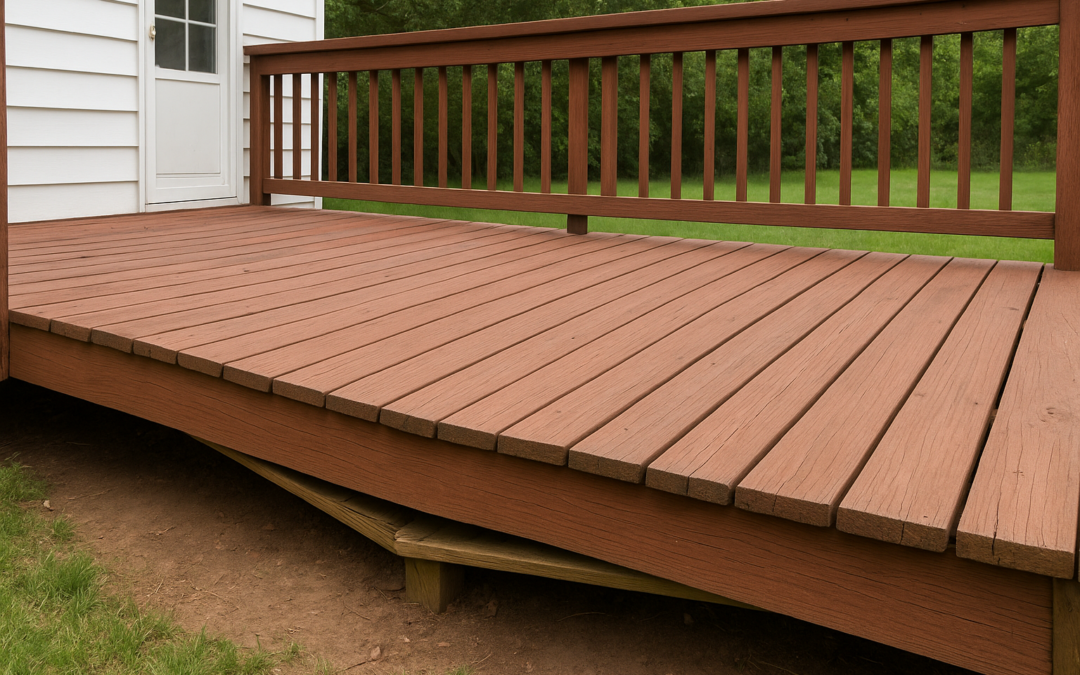
One issue a homeowner can recognize instantly is a sagging deck. You go outside and notice that something is wrong. One board is lower than the other, the surface is inclined towards the centre, or the railing is unsteady. It is a concerning fact, and it should be. A sagging deck is not just an aesthetic problem but a structural alert that requires immediate action.
But do you know what the positive aspect is? It is that most of the time, a sagging deck can be fixed and the faster you do it, the simpler and cheaper the task becomes. This is a simple, plain instruction on how to know what is going on under your feet and how to repair your deck without falling through the deck.
Why Decks Begin to Sag
A good deck depends on the combination of frame, hardware and foundation. As soon as any of the parts becomes weaker, the surface starts to slope, dip, or bounce. Knowledge of the cause will guide you to select an appropriate repair technique.
1) Weak or Damaged Joists
The deck boards are supported by joists, which bear most of the weight on the deck. The surface above them begins to sink when they rot, crack, or become unable to withstand the weight of what is on top of them. Moreover, the biggest culprit of all this is moisture. When water gets into the wood or is held between the deck and the wood, the joists become soft and bowed, which results in noticeable sagging.
2) Shifting or Sinking Footings.
Footings support the whole deck. The posts lose their support when the soil surrounding them moves or gets waterlogged, or when it sinks as time progresses. This tends to have a prominent depression in one direction or an irregular slope on the deck.
3) Ineffective Construction Methods.
Other decks are constructed with inadequate joists or beams or lumber that is not capable of supporting a long-term load. So, sagging is almost inevitable in such cases. Although the materials may have been good in the beginning, the ineffective spacing, connection, and the size of the posts make them structurally weak at a later point.
4) Moisture, Rot, and Drainage Problems
The real killer of wooden decks is excess moisture. In the absence of proper drainage the water collects around the footings or remains trapped between boards. Technically, this causes rot in beams, joists and posts over the time, which makes the deck weak and sagging.
5) Pest Damage
The structural frame may be attacked internally by the wood by termites or other wood-boring insects. The deck appears alright, apparently; however, the interior is weakened and thus sinks with time. This is an alarming situation for homeowners.
Red Flags That You Can Never Ignore
Sagging is a gradual process and when it sets in, your deck indicates a slight gradient before the sink sets in. You can feel the surface being either softer or springier on your feet or one area might seem a little lumpy. This is the first red flag.
The boards may be detached from the joists, the nails may begin protruding, or the railing may not stand straight. These minor details suggest that the deck should be fixed before the issue escalates into a major safety concern.
How to Repair a Sagging Deck?
When you notice sagging, immediately putting measures in place will save your deck.
Stop Using the Affected Area
Safety is the priority. Hence, you should not walk over or put any weight on weak areas. A very weakened part may fail at any time without giving any warning.
Inspect the Joists and Beams
Go beneath the deck and look thoroughly at the frame. Search through darkened wood, soft spots, cracks or zones where the wood crumbles on touching. Ventilation of any kind of rot will require replacement. Examine and carefully check metal brackets and joist hangers to find rust or bends, which may cause loss of strength in the structure.
Evaluate the Footings and Posts.
When the sagging is extensive or covers the whole side of the deck, then the problem can be in sinking foundations. You need to determine whether the soil surrounding the posts has been washed away or eroded. In case the footing is becoming tilted, sinking, or shifting out of the beam, the foundation should be corrected by the professionals.
Assess the Drainage Situations.
The initiation of moisture-related sagging usually starts with inadequate flow of water around the deck. Note the presence of water upon the footings, or the emptiness of downspouts, which are too near. Squeaky and muddy soils or those that remain wet throughout days suggest the problem of drainage, which will need attention with any structural restoration.
Support or Strengthen the Structure.
For minor sagging, some support beams or sister joists may be used to rectify the issue. Sistering is the process of joining a new joist to the old one in order to reinforce that area. This assists in balancing minor affected regions. This however, demands correct leveling and proper fastening to provide safety.
Replace Rotten or Badly Damaged Wood.
When joists, beams, or support posts have rot, they can only be safely replaced. Wood that is broken can never be strengthened, nor can it be repaired. So, it must be taken away. New untreated lumber is installed, and the deck is made strong again and no more sagging will be experienced.
Major Structural Issues? Call Professionals.
In the case of extensive, severe, and foundation-related sagging, expert assistance is needed. With such a professional team as Decks N Stones, they will examine the whole structure, detect the hidden weaknesses and make the deck level safely and also rebuild or strengthen the frame where it is required. Professional repairs guarantee that the deck is secure, sturdy and fit to endure years of service.
Preventing Future Sagging
- After repairing your deck, it should be maintained to ensure that your deck lasts long.
- Seal the Wood Regularly
- Sealant of good quality is used to cover the deck against water and avoid rot and weakening of wood.
- Maintain Good Drainage
- Make sure that water is drained off the deck. Divert down pipes and repair soil erosions as soon as possible to safeguard the footings.
- Keep the Deck Clean
- Debris traps moisture. Sweeping on a regular basis helps in avoiding the accumulation of water between boards.
- Check Hardware and Structure.
- Once every six months, do a check-up of loose screws, rusty bracket and slight movement.
Final Thoughts
Sagging deck is threatening, but that is seldom irreparable. Acting quickly is the key. It may be weakened joists, missettlement foundation, or even decayed moisture, but either way, it is better to deal with it at the beginning and keep your outside space safe and useful. In cases where the repairs are difficult or the entire evaluation is needed, the professionals at Decks N’ Stones are ready to fix your deck with accuracy and durability. Your deck must be a lovely element of your house–and under proper treatment, it will last for years.