
Did you know?
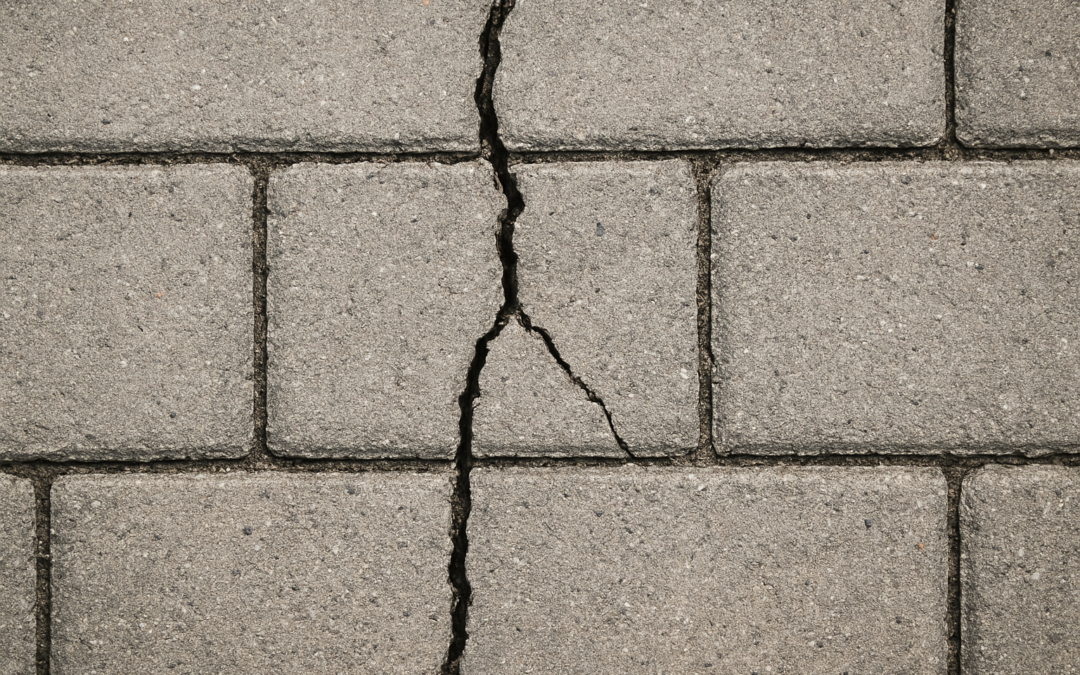
Cracked Pavers can quickly turn a beautiful outdoor space into an unpleasant site. It is crucial to explain the reasons why pavers crack and how the professionals can help to maintain your patio, walkway or driveway in a good and functional condition.
Weak or Unstable Base
Weak base is the most frequent cause of broken pavers. In case the ground beneath the pavers is not compacted, it subsides. Moreover, the pavers move when the ground starts shifting. And when they move, they crack.
Many homeowners neglect appropriate base preparation. Others simply include a layer of crushed stone. Some forget to compact between layers. Thus, the minor errors form plush areas.
What to do:
Remove the affected pavers. Add more crushed stone. Compact it well. Add a suitable layer of bedding sand. Install the pavers again. Then again, compact the surface. Remember, a solid entirety provides long-term stability.
Poor Drainage
Another silent cause is water. When water is sitting beneath your pavers, it undermines the soil. Wet soil gets soft, and the soft soil sinks. Thereafter, pavers fracture under pressure.
You may notice puddles. Or the paving can have an irregular surface. This shows that the water is not draining.
What’s the solution?
Mold the bottom in order to have water go by. Add a slight slope. Then install drainage channels where necessary. Gravel layers can also be added so that water passes through. The ground is hard due to good drainage.
Heavy Loads
Pavers are strong. But they have limits. Foot traffic can be taken care of by a patio. A driveway can handle cars. However, cracks may develop due to the parking of heavy trucks, vans or machinery on normal pavers.
In case your pavers were not designed to support heavy loads, they are overloaded. Over time, they break.
What to do:
Driveways should be done using heavier pavers. Select heavy and high-load options. So, make the base stronger with more crushed stone. Do not put excessive weight on the space to walk.
Freeze and Thaw Cycles
There is another challenge associated with cold climates. Water flows in between pavers. It freezes. Ice expands. This pushes the pavers up. The ice melts and the pavers become uneven. This continuous motion results in cracks.
Small freeze cycles can be damaging even in mild climates.
What to do:
Seal your pavers. Stuff with polymeric sand. Moreover, keep water out of gaps. Also, keep the edges in place so that the pavers are not displaced. These will minimize motion and guard your surface.
Using Low-Quality Pavers
Not all pavers are the same. Inexpensive pavers tend to be less strong. Their material mix is poor. They break so much with pressure or a change in the weather.
When your pavement is not cracking but disintegrating, you know it is poorly paved.
What to do:
Choose premium pavers. Look for trusted brands. Use the products that suit your climate. Durable pavers require less time, and they remain fresh.
Use of bad Installation Practices
Good pavers may not work when installed inadequately. Uneven bedding sand, wrong spacing or no edge restraint are all sources of problems. Certain pavers crack due to tightness while others fail because they move excessively. These little but crucial steps are usually overlooked in DIY installations.
What to do:
Check the spacing. Add proper edge restraints. Moreover, ensure that the layer of sand is even. When the paving area is extensive or complicated, contact a professional team.
Soil Movement
There are soils that swell in the presence of water and contract in the absence of water. Clay soil is a common example. This is an inherent motion that strains the pavers. Over time, cracks form.
You can find several cracks at random places. This implies that the primary problem is the soil.
What to do:
Add a deeper base. Place geotextile cloth between the soil and the crushed stone. This makes it stronger. It lowers soil displacement as well as makes your pavers firm.
Lack of Maintenance
Pavers need a bit of care. Not noticing minor problems results in even larger problems. Water is allowed in through loose sand, weeds, or gaps. This undermines the foundation and results in fractures in the future.
What to do:
Sweep your pavers often. Refill the joints with sand. Remove weeds early. Coat tiles after every few years. Maintenance is easy, and your surface remains strong.
When to Call a Professional
Some problems are easy to fix. But others need expert help. If your entire patio or driveway is sinking or cracking, it means the foundation has failed. A professional can rebuild the base and make the area strong again.
Decks N Stones can assess the damage and give you the best solution. Their team ensures every layer is installed correctly. And they help your pavers stay crack-free for years.