
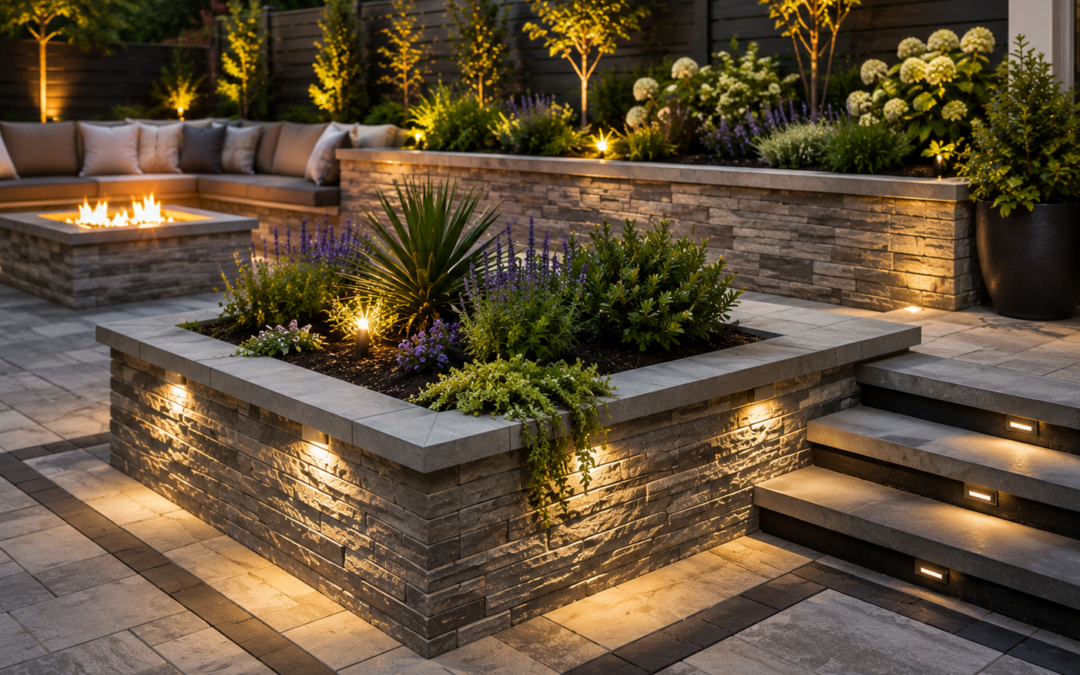
It’s no longer simply about patios, walkways and stonework; it’s about balance. The magic of a great landscape design is achieved when the hardscape and the plants work together, like a symphony, not when the plants are added after the fact, like an afterthought. This is where bespoke planters make a world of difference.
At Decks N Stones, we see planters as more than decorative elements; they are design elements. They blend hard architectural elements, provide seasonal interest and add character to formal designs. They can transform any stone patio into a stylish and inviting outdoor living space.
Let’s explore creative custom planter ideas that naturally align with your hardscape design while enhancing both style and functionality.
Integrated Planters for a Cohesive Look
An elegant solution is to incorporate planters into the hardscape design itself. Stone planters are integrated into a paved walkway, retaining wall or bench.
Rather than adding containers to the mix, these planters are built out of the same or similar materials to your paving stones. This creates a clean, uninterrupted flow throughout the space.
Why it works:
Maintains visual consistency
Enhances architectural balance
Minimises outdoor distractions
Provides an enduring luxury feel
These work well around furniture, as the plants provide a visual barrier but also allow views.
Raised Wooden Planters for Warm Contrast
If you have a hardscape design with stone, concrete or pavers, wood planters can be used to add warmth. The organic texture of wood softens the harshness of hard surfaces, making the space more welcoming.
Cedar, teak or preservative-treated hardwood planters are great for outdoor use because they are durable and textured.
Best placement ideas:
Along patio edges
Beside walkways
To edge dining areas
For a cohesive look, you can stain or paint the wood to blend with fencing, decking or pergolas.
Contemporary Concrete Planters
Modern and contemporary gardens are all about simplicity. Concrete planters with smooth edges and geometric shapes work well with straight lines and neutral tones of contemporary hardscape.
These planters are particularly suitable for open outdoor designs with a strong sense of structure.
Design tips:
Use monochrome colours such as grey, black or white
Repeat shapes for rhythm
Pair with sculptural plants and grasses
Concrete planters provide a classic look without distracting from the form.
Tiered Planters for Multi-Level Hardscapes
If your landscape includes steps, platforms or terraces, tiered planters can add to the dimension. Rather than placing plants at a single level, tiered planters enable plants to fall over edges, thus leading the eye through the garden.
Ideal uses include:
Multi-level patios
Sloped gardens
Retaining wall edges
This technique allows for more flexibility in rigid stone walls and also uses space efficiently.
Corner Planters to Soften Sharp Edges
Hardscape often feature solid edges and corners. Corner planters are a great option to soften the edges and make underutilised areas more attractive.
Designing planters to fit into corners breaks up the monotony and adds a more natural edge.
What to plant:
Bushy shrubs for fullness
Flowering plants for seasonal color
Ornamental grasses for height
These planters are ideal for patios, driveways and walls.
Floating Planter Boxes for Decks
Raised planter boxes are ideal for deck areas. These “floating” planters are usually placed slightly above ground or on a railing.
They add depth, making wooden or composite decks more interesting
Advantages include:
Space efficiency
Easy maintenance
Improved privacy in the case of tall plants
They also enable gardeners to switch out plants throughout the year.
Natural Stone Planters for Rustic Elegance
For a more natural look, natural stone planters complement traditional and rustic hardscape.
Stone types such as sandstone, limestone, or granite will complement patios, garden walkways or retaining walls.
Styling ideas:
Use with ivy or ground cover
Add a variety of textures
Combined with a gravel or pebble base
This look is great for rustic or traditional gardens.
Vertical Planter Walls for Small Gardens
Not all gardens are large. Vertical planter walls are ideal for limited space gardens or patios.
These planters use walls and fences as supports and plants grow upwards.
Perfect for:
Herbs and kitchen gardens
Decorative floral arrangements
Green privacy screens
Planted walls also provide a green background to stone or brick walls.
Planters with Integrated Lighting for Night-time Appeal
Contemporary landscapes are not just for daylight hours. Lighting integrated into planters provides subtle light to accentuate and beautify the scene.
Planters can have LED strips or gentle uplighting embedded into or around the base to accentuate foliage and other hardscape elements.
Benefits:
Improves outdoor visibility
Creates magical evenings for outdoor living
Adds luxury appeal
Great for pools, patios and living rooms.
Multimaterial Planters for Personality
To add a touch of uniqueness, try mixing materials like stone and wood, metal and concrete, or ceramic and brick to create planters that are as unique as you are.
Such mixed-material planters are great if you’d like your garden to be different from everyone else’s.
Design approach:
Balance textures carefully
Keep colour palettes cohesive
Use materials in other parts of the landscape for consistency
Bringing It All Together
Custom planters are not just decorative elements; they are design elements that bring structure to vegetation. When coordinated with your hardscape, they offer a space that is purposeful, harmonious and welcoming.
At Decks N Stones, we are dedicated to creating outdoor spaces where all the elements are in sync – from the walkway paved with stone to the placement of planters. Together, they can transform your backyard into an extension of your living space.
If you’re looking to design a landscape that is both structured and organic, custom planters are a powerful and beautiful addition to your design.
Enrich your landscape with custom planters that enhance your hardscape design.