
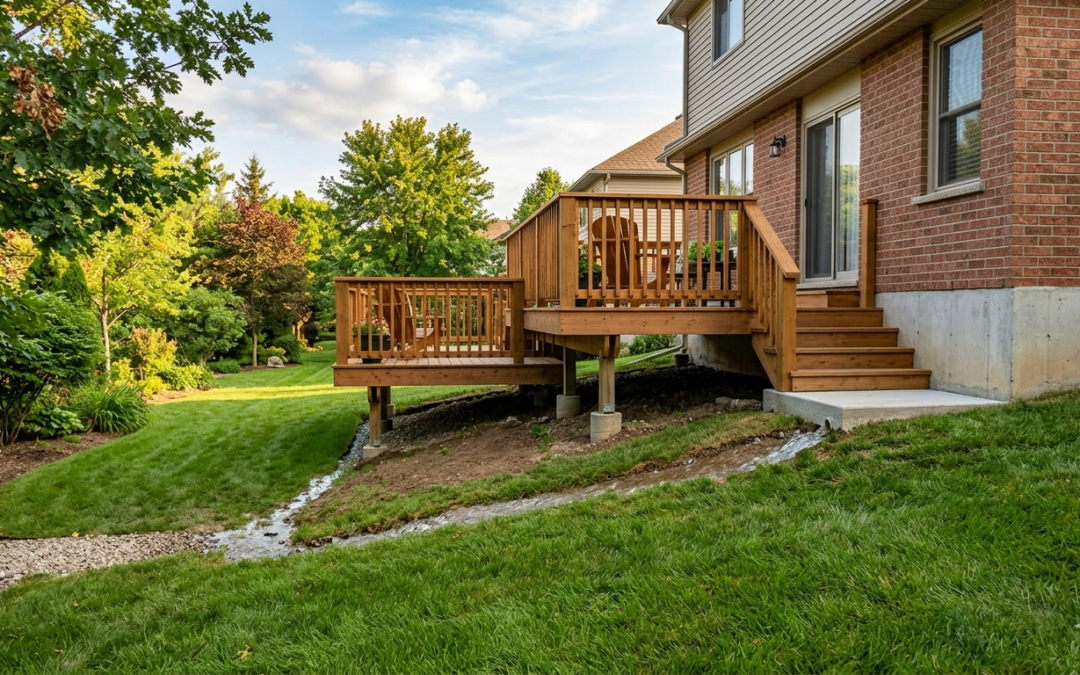
Water rarely announces its damage. It oozes under the carpet, gets close to your home and gradually starts to undermine the things that hold it all together. When your yard is not graded correctly, your deck and foundation will rot and crack long before you can see it.
Yard grading is not only about the aesthetics. It is concerning protection, drainage and structural safety in the long run. We shall know how it functions and why it is of interest.
What Is Yard Grading?
Yard grading refers to the process of molding the earth around your house in such a manner that it pushes the water away rather than towards the house. The ground must slope off the foundation and deck lightly. Such a simple modification will stop the ponding-up of rainwater around your place.
The standard area of a slope is six inches in a span of ten feet near your home building, which enables the water to be transported by the gravitational force after it has rained.
In the absence of this slope, your house is flooded with water at the bottom. This may cause severe structural difficulties in the long run.
Why Bad Grading Hurts Your Foundation.
All the weight of your home rests on your foundation. The soil will become wet when water accumulates around it. Wet soil swells and exerts pressure on foundation walls, which may cause:
– basement leaks
– mold growth
– structural shifting
Trapped water may also freeze and swell in colder climates, which further undermines concrete. The exposure to moisture, consistent even in moderate climates, decreases foundation material strength.
Through good yard grading, the chances of having a stable and dry soil are increased and thus your foundation will be solid even after decades.
Why Your Deck Is Also at Risk
Homeowners are only concerned with the foundation, yet decks are also prone to bad drainage.
The water accumulated under or around your deck creates continuous moisture exposure and may result in:
– wood rot
– warped boards
– rusted fasteners
– mold and mildew buildup
The wood that is pressure-treated is not resistant to moisture over a long period. When your deck posts are in wet soil, they do not last long.
Correct grading will make certain that water does not stick on the deck footings, keep the support structure dry and avoid early degradation.
Indications Your Yard Needs Regrading.
You can already realize the symptoms of some danger without understanding why. Look for:
– standing water after rain
– soil that pulls off the foundation walls.
– channels of erosion in your yard.
– damp or musty basement odors
– uneven or sinking deck posts
These are signs of drainage issues that can be addressed through grading to a great extent.
Advantages of Grading of the Yard.
There are a number of long-term benefits of appropriate grading:
– Water Damage Prevention- Water is considered to be one of the most costly risks to fix. The right slope will prevent it in the critical areas.
– Prevents Structural Integrity Losses – Dry soil is more supportive of foundations and deck footings than when the ground is wet.
– Lessens Mold Growth -Mold growth is minimized all around your house.
– Enhances Landscaping Health- The plants enjoy balanced drainage instead of roots flooded with water.
– Improves Property Value- Buyers like visible drainage solutions and well-kept outdoor spaces.
How Professionals Approach Yard Grading.
Professional grading does not just involve the transfer of soil. Contractors assess:
– soil composition
– existing drainage patterns
– discharge positions of the downspout.
– slope measurements
They can either add topsoil, install swales or even combine drainage systems like French drains when necessary. The aim is not a steeper yard but rather a controlled water movement.
Grading must be precise. An excessive slope will lead to erosion, and an insufficient slope will not help.
Maintenance After Grading
There can be no one-time solution to grading when it is ignored. With time, soil may silt, and excessive rainfall may move the upper layers. Constant checks take care of the slope.
Keep gutters clean. Have downspouts that are at least five to ten feet out of the house. Check the points where water used to stand.
Minor modifications at the beginning of the process save big interventions at the end.
Final Thoughts
Grading of the yard is a silent protection. You will never see it in operation, but it always protects your deck and foundation against water damage.
Drainage problems should be addressed and not overlooked since they may have an expensive cost. Early grading is a method to ensure the structural strength, avoid rot, and keep your outside areas safe and strong.
Ground under the building is as important as the structure over the building, as far as the security of your home is concerned. Contact Decks N’Stones today and let our experts examine the situation of your deck thoroughly before fixing it.